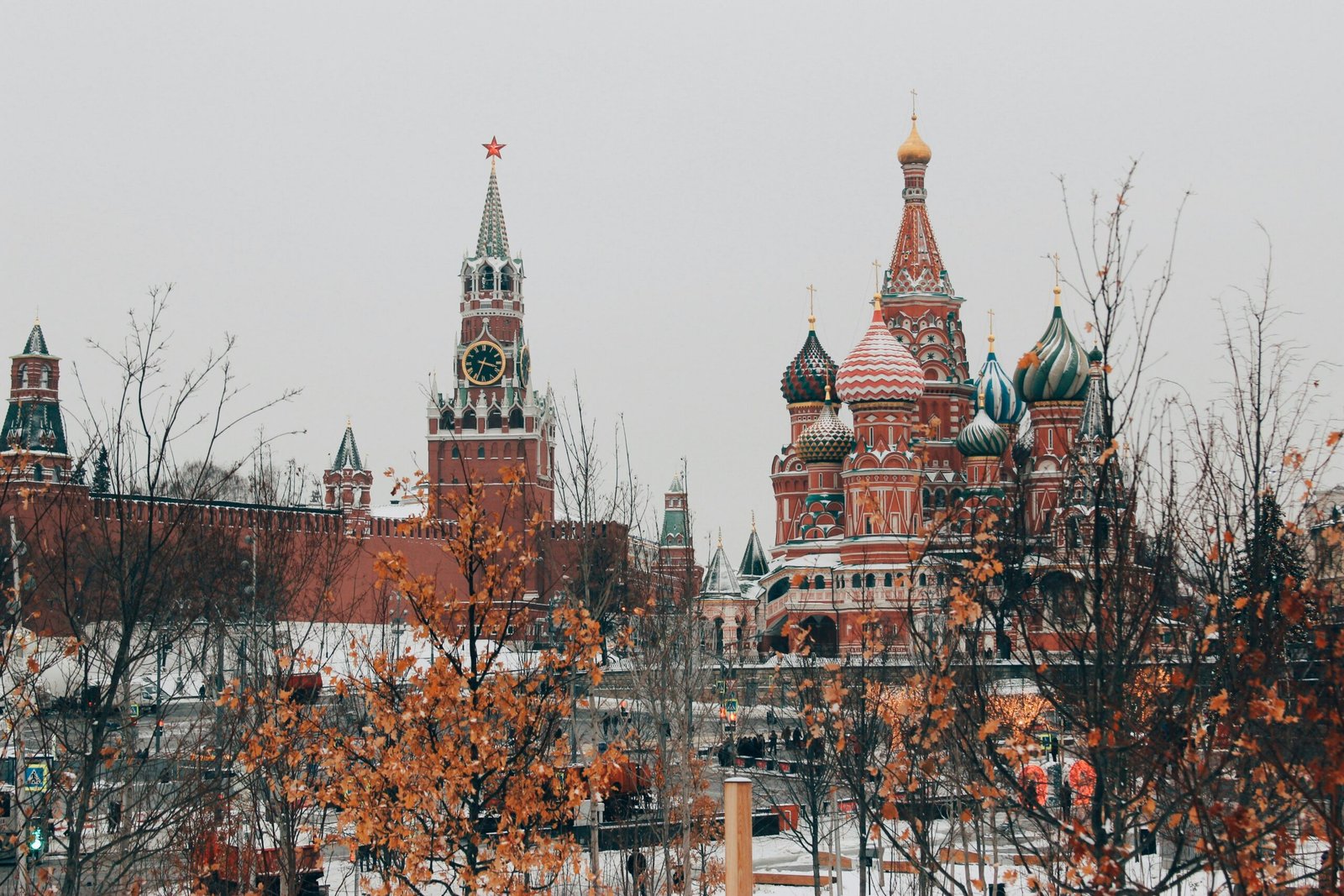
Power no longer needs to shatter systems to dominate them. It only needs to re-angle them.
An investigative analysis of how modern power reshapes courts, media, and bureaucracy, preserving democratic form while redesigning institutions for control.
The defining feature of modern governance is not repression, but reconfiguration. Across political systems that still wear democratic skin, institutions remain standing courts, parliaments, media, watchdogs, and elections. They continue to operate. They issue rulings. They publish. They convene. They vote.
Yet their function changes.
This is the quiet architecture of control: the art of transforming institutions from constraints into conduits, from brakes into amplifiers. Nothing is abolished. Everything is preserved, just differently aligned.
In this model, power does not confront resistance. It routes it.
This is the structural dimension of judo politics: governance that survives by absorbing pressure and bending the geometry of accountability.
Capture Without Rupture
Twentieth-century authoritarianism declared itself. It replaced constitutions, banned parties, and closed newspapers. It required rupture.
Twenty-first-century power prefers continuity.
A court is not shut down. It is expanded, re-staffed, or procedurally bound.
A regulator is not dismantled. It is budgeted into irrelevance.
A media landscape is not censored. It is economically re-engineered.
A civil society is not banned. It is classified.
The surface remains democratic. The interior logic shifts.
This form of control thrives because it generates no singular moment of outrage. There is no day the system “falls.” Instead, there is a sequence of technical adjustments, each defensible in isolation, each procedural, each lawful.
Power advances through footnotes.
The Judiciary as Structural Lever
Courts are the most potent lever in this architecture.
Where brute regimes once feared judges, modern regimes learn to use them. Judicial authority is not suppressed; it is repositioned. Jurisdiction is expanded in one direction, narrowed in another. Appointments become ideological. Case management becomes strategic.
The court remains independent in form while predictable in effect.
Every controversial decision invites protest. Every protest justifies reform. Every reform reweights the institution. The system feeds on reaction.
Power does not silence the judge. It arranges the bench.
Media Without Muzzles
Control over information no longer requires censorship.
It requires conditions.
Advertising ecosystems are reshaped. Licensing becomes discretionary. Defamation law becomes kinetic. Digital platforms are flooded. State-aligned outlets gain scale. Independent ones drown in cost, litigation, and reach.
The press remains free.
It is simply unviable.
Investigative work still appears. It just never accumulates. Each exposé becomes one more data point in a permanent storm of noise. Outrage is produced faster than memory. Truth circulates then dissolves.
Power does not ban speech. It removes its trajectory.
Bureaucracy as Terrain
Bureaucracy is not neutral. It is topography.
Modern regimes exploit this by turning procedure into friction. Every challenge must pass through committees, compliance, registration, audit, and review. Each step is legal. Each delay is justified. Each form is defensible.
Opposition groups become administrators. Journalists become respondents. Activists become registrants.
Energy migrates from action to paperwork.
The state does not block movement. It lengthens the corridor.
Why This Model Endures
This architecture is durable because it:
- Preserves legitimacy
- Distributes responsibility
- Avoids spectacle
- Converts criticism into justification
- Exhausts opposition without confrontation
There is no villain. Only process.
Every abuse has a form. Every distortion has a rule. Every capture has a rationale. External observers argue over intent. Domestic audiences debate legality. Power advances while the world debates semantics.
The system remains standing. The function changes.
Control as Design
What emerges is governance as design rather than domination.
Power becomes an engineer of flows: legal, informational, procedural. It studies where pressure enters and adjusts the angle. It maps friction and relocates it. It learns how long resistance can endure inside a system before collapsing under its own administrative weight.
Institutions become load-bearing structures not for accountability, but for stability.
This is why modern regimes do not fear institutions. They build with them.
The architecture does not look like a cage. It looks like a city. It results in institutional capture.
And cities, unlike prisons, are hard to escape because they feel like home.
The Structural Endgame
The tragedy of this model is not that democracy disappears. It is that it remains perfectly intact, permanently ineffective.
Citizens vote. Courts rule. Journalists publish. Legislatures debate. Nothing is false.
Nothing changes.
Power has learned that the future belongs not to those who break systems, but to those who reorient them.
The contest of this century will not be between freedom and repression.
It will be between those who control institutions and those who understand their geometry.
Because in the age of quiet architecture, control is no longer a fist.
It is a blueprint.
Conclusion: Power That Leaves No Scars
The most effective systems of control are those that leave no visible wounds.
Modern power has learned that breaking institutions creates martyrs, movements, and memory. Rewiring them creates none of these. It produces a world in which everything appears intact, courts function, media publish, elections occur, yet nothing accumulates and thus democratic backsliding appears. Change becomes procedural. Dissent becomes administrative. Accountability becomes an event rather than a force.
This is why the architecture of control is so difficult to confront. There is no single law to repeal, no palace to storm, no tyrant to unseat. There is only a sequence of “reasonable” adjustments, each defensible, each incremental, each hollowing out a little more of what once constrained power.
Citizens still participate. They vote, protest, litigate, and publish. The system invites them in. It just ensures that every path loops back into itself.
What disappears is not freedom, but effect. Action loses consequence. Institutions lose bite. Politics becomes movement without destination.
In earlier eras, power was ruled by force. In this one, it rules by design.
And the great challenge of this century will not be how to overthrow systems, but how to recognize when they are still standing yet no longer standing for us.
Bibliography & External Sources
- Journal of Democracy — How Authoritarians Weaponise the Law
https://www.journalofdemocracy.org/news-and-updates/how-authoritarians-weaponize-the-law/ - Annual Review of Law and Social Science — Legalisation, Judicialization, Lawfare
https://www.annualreviews.org/doi/10.1146/annurev-lawsocsci-061824-074150 - V-Dem Institute — Autocratization Turns Viral
https://www.v-dem.net/documents/19/dr_2021.pdf - Freedom House — Nations in Transit: Democratic Backsliding in Central and Eastern Europe
https://freedomhouse.org/report/nations-transit - Penn State Law Review — Lawfare and the Rule of Law
https://www.pennstatelawreview.org/the-forum/lawfare-both-an-existential-threat-to-the-international-rule-of-law-and-an-indispensable-tool-of-american-foreign-policy-in-the-twenty-first-century/ - Encyclopaedia Britannica — Authoritarianism
https://www.britannica.com/topic/authoritarianism
For deeper context on these power tactics, see our Intelligence Notes & Critical Reads.