Follow the money laundering pipeline from Myanmar scam compounds: how billions in fraud proceeds were laundered through crypto, casinos, shell accounts, and global payment systems.
How Scam Billions Moved Through Money Laundering Pipeline from Myanmar to the Global Financial System
When cybercrime earns tens or hundreds of millions of dollars, the question becomes simple:
Where does the money go?
In the case of the Myanmar scam compounds, the answer reveals a sophisticated, multi-layered financial network involving cryptocurrencies, shell accounts, informal banking corridors, gambling credits, and phantom identities designed to obscure the flow of stolen funds.
Understanding this pipeline is vital not just for law enforcement, but for anyone affected by digital fraud. Because money that can’t be traced becomes money that can’t be recovered.
And when recovery fails, victims are left to absorb the loss.
From Victim to Laundered Capital
Most victims never see the final destination of their funds. They receive texts or calls designed to appear urgent fraud notifications, job offers, or bogus investment platforms. When they transfer money, it goes not to a single account but into a branching pipeline engineered to fragment and obscure:
- Immediate Deposit: Money lands in accounts controlled by the syndicate. These accounts may be under fake names, shell companies, or local agents acting as “money mules.”
- Layering: Funds are split into dozens of sub-accounts, transferred through different banks or mobile wallets, and sometimes routed through third-party services.
- Conversion: Once obscured, funds are converted into other forms of crypto, gambling credits, prepaid cards, or foreign currency.
- Extraction: The legalised value is withdrawn or transferred offshore to accounts that appear unrelated to the original fraud.
This is classic money-laundering methodology applied at an industrial scale.
Crypto’s Central Role
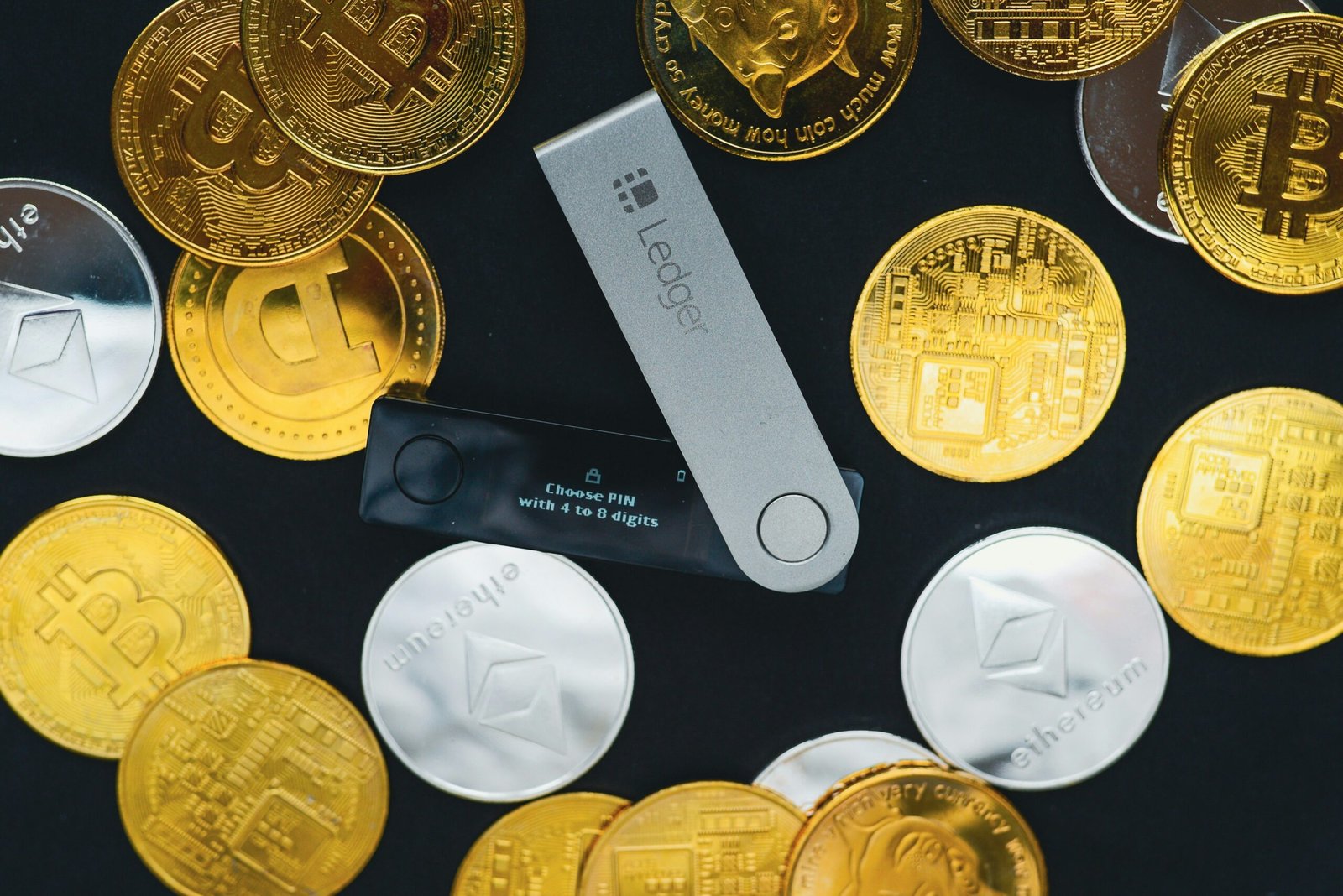
Cryptocurrencies emerged as a cornerstone of the scam pipeline.
Assets like Bitcoin and Ethereum offer pseudonymity and global transferability, making them attractive conduits for illicit funds. Blockchain firms have repeatedly documented patterns that indicate laundering behaviour:
According to Chainalysis, scam proceeds often pass through:
- Crypto exchanges with lax verification
- mixing services that blend legitimate and illegitimate funds
- decentralised finance platforms used to obfuscate origin.
(Source: https://www.chainalysis.com/reports/crypto-crime/)
Victims send fiat currency to scam operators, who immediately convert it into digital assets. These assets jump between wallets, sometimes through mixers or privacy protocols, before landing in accounts where identity is harder to connect to real individuals.
Once in crypto form, money crosses borders with near invisibility.
Gambling and “Casino Credits”
In many Myanmar scam compounds, there was a peculiar intermediary step:
online and on-site gambling credits.
Scammers would send victims links to “investment platforms” that mimicked casinos. Victims were encouraged to deposit money, “play” to build up a withdrawal balance, and then cash out.
But there was no real game. There was only conversion.
In gaming ecosystems, credits could be redeemed for cash or transferred to other accounts. The illusion of gambling served as a conversion mechanism, transforming fiat into a less traceable asset and then out into real money through partner accounts or third-party cash-out services.
This model leveraged both digital interfaces and real-world establishments, such as casinos operating near border zones.
The Role of Money Mules
Shell accounts alone would not be enough.
The scam pipeline used money mules, individuals recruited to receive and forward funds on behalf of operators. Mules often:
- opened bank accounts under false pretences
- Received multiple small deposits before transferring them onward,
- used foreign SIM cards for verification,
- reported high volumes with no legitimate business justification
Mule networks create additional abstraction layers in the pipeline. Even if one account is identified as suspicious, dozens more remain hidden behind different phone numbers, IP addresses, and identities.
This fragmentation turns financial tracing into an intelligence puzzle requiring coordination across banks and jurisdictions.
Informal Value Networks: Hawala and OTC Brokers
Outside of official banking, informal systems like hawala and over-the-counter (OTC) brokers played a role.
Hawala systems—trust-based networks that settle value through codes rather than bank transfers—allow funds to be “moved” without corresponding digital records in the banking system. A scam operator in Myanmar could instruct a hawala agent in India or China to release value to an associate, while the actual monetary settlement occurred later through informal channels.
Likewise, OTC brokers operating in crypto can move large sums with minimal public trace, especially when either side is willing to circumvent KYC (Know Your Customer) requirements.
Cybercrime financial experts consider these channels essential components of high-income laundering schemes.
Regulatory Gaps and Enforcement Blind Spots
The success of this pipeline depended on regulatory gaps:
- banking systems that do not flag low-value, high-volume accounts
- mobile wallet services without robust identity verification
- Crypto exchanges with weak AML (Anti-Money Laundering) protocols
- informal brokers operating outside formal oversight
Even when law enforcement identified suspicious accounts, by the time investigations began, the funds had already moved.
This temporal advantage movement first, traceability later, defines modern laundering schemes.
Why It Matters to the Public
Victims rarely understand where their money ends up. They see only – lost funds.
But tracing the pipeline reveals patterns that empower action:
- Awareness: Recognising how scammers convert funds helps potential victims identify red flags earlier.
- Policy Pressure: Public understanding generates demand for stronger AML enforcement across financial systems.
- Victim Advocacy: Documented pathways support recovery efforts and litigation strategies.
Cyber truth is not just forensic.
It is educative.
What Enforcement Has Started to Do
Legitimate investigators have made progress:
- Blockchain analysis companies have traced wallets tied to known scam syndicates
- International law enforcement partnerships share intelligence across borders
- Banks are increasingly implementing automated monitoring systems
- Fintech companies face rising pressure to tighten onboarding
But obstacles remain:
- jurisdictional fragmentation
- linguistic barriers
- legal differences in fraud definitions
- sophisticated obfuscation techniques
Until financial systems align more closely across borders, the pipeline remains exploitable.
Cyber Truth
The pipeline that moves scam money is not chaotic; it is engineered.
A victim’s payment initiates a carefully designed cascade of layering, obfuscation, conversion, and extraction sequence that transforms stolen value into assets unreachable by the ordinary banking system.
Scammers purposely exploit structural gaps in oversight, technology, and international cooperation.
Understanding that the pipeline is the first step toward dismantling it.
Because once you can see the path money takes, you can begin to follow it instead of letting it disappear into the ether.
Bibliography & Sources
- “China executes 11 people linked to Myanmar scam operation” — The Guardian
https://www.theguardian.com/world/2026/jan/29/china-executes-11-people-linked-myanmar-scam-operation - “China executes four more Myanmar mafia members” — The Island
https://island.lk/china-executes-four-more-myanmar-mafia-members/ - “China executes 4 more accused Myanmar scam centre leaders” — Free Malaysia Today
https://www.freemalaysiatoday.com/category/world/2026/02/02/china-executes-4-more-accused-myanmar-scam-centre-leaders - Chainalysis Crypto Crime Report — Blockchain analysis on illicit fund flows
https://www.chainalysis.com/reports/crypto-crime/ - Interpol Cybercrime Resources — Organised fraud and money laundering context
https://www.interpol.int/en/Crimes/Cybercrime
For deeper context on Cybercrime, see our Cybercrime Daily Brief.