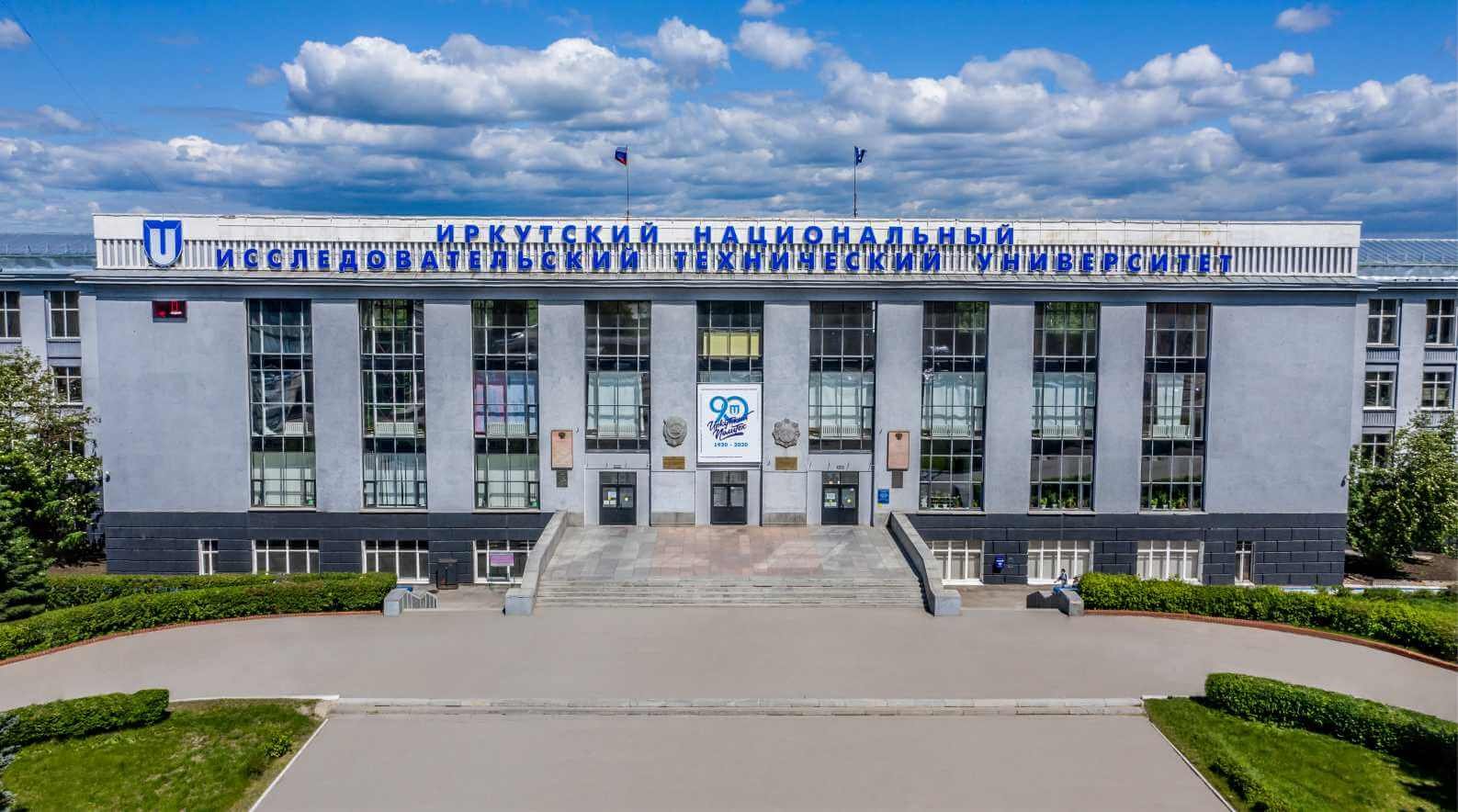
An evidence-led investigation into drugs, retaliation, and institutional failure inside a Russian university based on documents, video, and official records.
Executive Summary: From Inside A Russian University
This investigation documents, with primary evidence, the experience of an Indian international student enrolled at Irkutsk National Research Technical University (INRTU). It traces a clear sequence: lawful admission → campus integration → discovery of illicit drug use inside a university dormitory → formal reporting through administrative channels → institutional inaction and hostility → escalation that exposed the structural vulnerability of foreign students.
The reporting is evidence-first. Allegations are narrowly framed; documents, media, and contemporaneous records are disclosed with redactions. Where proof ends, the article stops.
1. Lawful Entry and Student Status
The author entered the Russian Federation on a valid student visa issued for academic purposes and executed a formal educational contract with INRTU. These records establish lawful presence, enrollment, and the rights and obligations governing the student–university relationship.
Why this matters: Cross-border investigations are often dismissed on procedural grounds. Visa and contract records foreclose claims that the student was undocumented or unofficial.
Evidence on record (supporting article linked):
- Educational contract (redacted)
- Student visa (redacted)
- University acknowledgment of enrollment
2. Residence Inside Dormitory No. 9
Upon arrival, the author was assigned accommodation in Dormitory No. 9, a university-managed residence housing domestic and international students. Handover documentation confirms occupancy and the period of residence.
Dormitory No. 9 contains shared corridors and washroom spaces that fall under university oversight and duty-of-care obligations.
Evidence on record:
- Hostel allotment/handover document
- Photographs confirming residence context
3. Campus Integration Before Any Complaint
Before raising concerns, the author participated in routine academic and extracurricular activities. The university itself documented this participation on official blog pages and communications.
Why this matters: Institutional acknowledgement contradicts narratives that the student was isolated, marginal, or acting in bad faith from the outset.
Evidence on record:
- Archived university blog posts featuring student activities
4. The Trigger Event: Drugs Inside a University Dormitory
While residing in Dormitory No. 9, the author encountered apparent drug use in university dormitory, to be precise, inside a shared washroom. Rather than publishing the material publicly, the author recorded limited video evidence and escalated the matter to university authorities.
The footage is not presented as proof of a criminal network. It is presented as sufficient cause for an internal inquiry, nothing more, nothing less.
Evidence on record:
- Edited video clip (faces anonymised; metadata preserved)
5. Reporting Through Official Channels
A written complaint was submitted to the university administration detailing:
- Location (Dormitory No. 9)
- Nature of concern (drug consumption)
- Request for institutional action
This step is central. The author pursued formal remediation, not exposure.
Evidence on record:
- Complaint letter (stamped/acknowledged)
6. Institutional Response: Silence and Hostility
Following the complaint, no transparent investigation or protective measures were communicated to the author. Instead, the campus environment deteriorated. Hostility circulated within student networks; administrative engagement diminished.
A separate student appeal submitted by a female resident alleging a nighttime intrusion illustrates the broader climate of insecurity perceived within the same dormitory complex. This material is presented as context, not as proof of guilt by any individual.
Evidence on record:
- Student appeal document (redacted)
- Screenshots illustrating campus discourse (contextual use only)
7. Escalation Beyond the University
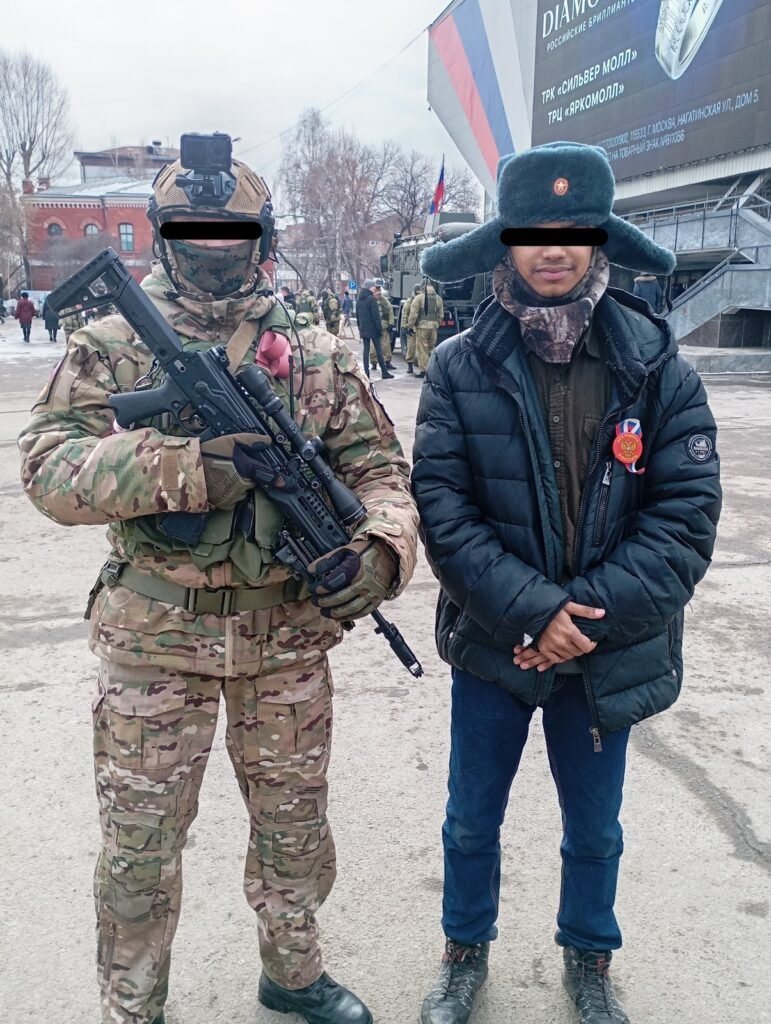
As tensions escalated, the author encountered armed state personnel in public settings connected to broader security operations. Photographs document proximity to military actors during this period.
Important limitation:
The investigation does not claim formal conscription orders or signed combat contracts. It documents coercive proximity and intimidation experienced by a foreign student already in conflict with institutional authorities.
Evidence on record:
- Photographs with armed personnel (faces blurred; dates preserved)
8. Not an Isolated Case
Reporting by a major Indian outlet on another Indian student at a different Russian university who alleged coercion following drug-related charges raises a question of pattern. This article does not conflate cases. It notes similarity and urges scrutiny.
Why this matters: When independent cases show comparable vulnerabilities, institutional safeguards deserve examination.
9. Methodology and Evidentiary Boundaries
- Primary sources: contracts, visas, hostel records, original media
- Secondary sources: contemporaneous reporting
- Redactions: applied to protect identities and sensitive data
- Claims standard: documentary support or explicit limitation
This investigation avoids generalisation. It documents one case rigorously to illuminate systemic risk.
Conclusion: Why This Story Matters
International students operate at the intersection of immigration law, institutional power, and social vulnerability. When universities fail to investigate credible concerns, especially those involving the safety of foreign students in Russia bear a disproportionate risk of campus retaliation.
This report does not ask readers to infer guilt. It questions the credibility of Russian educational institutions to answer documented questions.
Editorial Note and Series Context
This article serves as the central pillar of an evidence-led investigative series examining institutional accountability, safety of foreign students in Russia, and the structural vulnerabilities faced by international students within foreign higher-education systems.
The series documents one case in depth, using primary records and contemporaneous material, to illuminate broader questions of duty of care, credibility of Russian educational institutions, whistleblower protection, and administrative transparency in cross-border education environments.
Subsequent articles in this series will examine:
- Documented proof of enrollment and lawful student status
- Living conditions and oversight failures inside Dormitory No. 9
- Drug-use reporting and the university’s administrative response
- Campus climate, intimidation, and social retaliation after complaints
- Encounters with armed authority and escalation beyond the university
- Comparable cases involving foreign students at other Russian institutions
Each article links back to this pillar to provide context, continuity, and a consolidated evidentiary trail.
Sources & References
This investigation draws on primary documents held by the author, original audio-visual material, and corroborating secondary reporting by established news organisations.
All documents are published in redacted form to protect personal data and comply with privacy and legal standards.
All translations from Russian are literal.
Where evidence establishes context rather than proof, it is explicitly identified as such.
Primary sources include:
- Educational and accommodation records issued by the university
- Immigration documentation confirming lawful student status
- Original video and photographic material recorded by the author
- Formal written complaints submitted through institutional channels
Secondary sources include:
- Reporting by Indian and international news outlets on comparable cases involving foreign students in Russia
- Official institutional publications used for contextual verification
A complete, hyperlinked bibliography is provided in the Evidence & Documentation Archive accompanying this series.
This article is part of an ongoing investigative series. Additional documents and supporting analyses are published separately to preserve clarity and evidentiary integrity.
For deeper investigations on such topics, see our Cybercrime Investigations & Exposes.