How a simple behavioural design experiment, yellow railway sleepers and staccato horns, reduced Mumbai local train deaths by up to 80%.
Mumbai, A City That Lives on the Edge of the Tracks
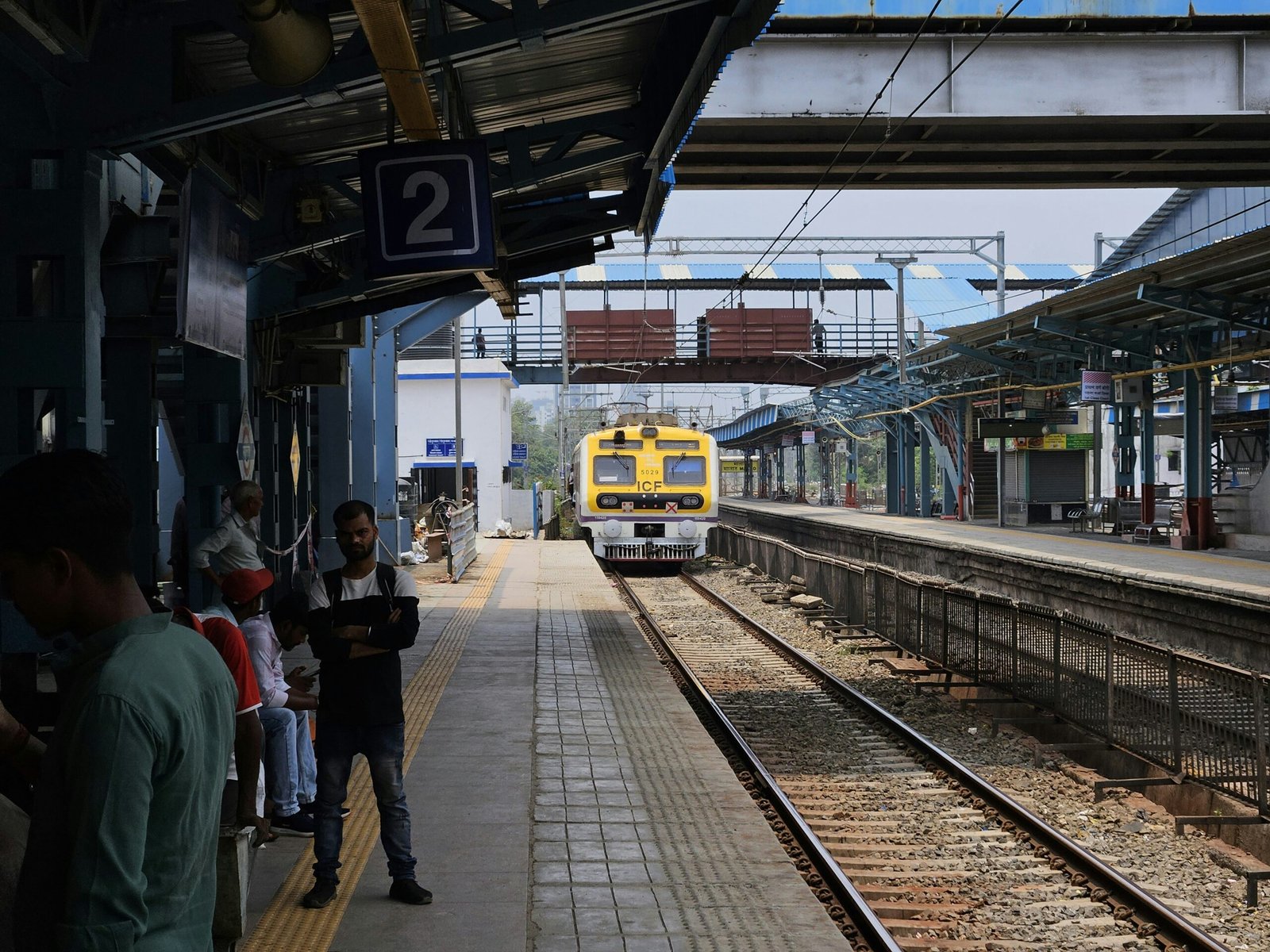
Mumbai, India’s financial capital, runs on one of the most heavily used suburban rail networks in the world. The Mumbai Suburban Railway, inaugurated in 1853, carries an estimated 7.5 million passengers daily, making it not just a transport system but the city’s lifeline.
Yet, beneath this efficiency lies a persistent and tragic problem: deaths caused by track crossings.
Despite repeated warnings, footbridges, barricades, and deployment of railway personnel, hundreds of commuters lose their lives each year while crossing tracks—often in moments of misjudgement rather than recklessness.
The question was never why people cross tracks, but rather:
How do you stop a fatal decision in the few seconds before it happens?
Why Conventional Safety Measures Failed
Indian Railways, Mumbai divison has long relied on:
- Warning signboards
- Physical barriers
- Fencing and foot overbridges
- Railway Protection Force (RPF) personnel
While these measures are well-intentioned, they suffer from three core limitations:
- Human staffing is finite – vulnerable crossings far outnumber available personnel
- Static warnings lose impact – commuters habituate and ignore them
- Split-second decisions – most fatalities occur within seconds, leaving no time for enforcement
The problem was not infrastructure alone—it was human behavior under pressure.
A Radical Yet Simple Intervention: Behavioral Architecture
Enter Final Mile, a Mumbai-based behavioral design and cognitive psychology consultancy.
Instead of policing commuters, Final Mile focused on nudging behavior at the moment of decision.
Their solution was deceptively simple.
The Yellow Sleeper Experiment
At identified accident-prone locations, Final Mile implemented three low-cost interventions:
1. Painting Railway Sleepers Bright Yellow
- Sleepers were painted at fixed intervals
- This created a visual speed reference
- Jaywalkers could now visually estimate how fast an oncoming train was approaching
Human brains struggle to judge speed over long, uniform distances. The yellow markings introduced cognitive anchors, correcting this bias.
2. Introducing Staccato Horn Signals
- Signboards instructed loco pilots to use short, rapid bursts of horn
- Unlike long continuous horns (which people tune out), staccato sounds trigger alertness
- The auditory disruption forced attention at the critical moment
3. High-Impact Visual Warning Boards
- Graphic signboards depicted the final moments of a person struck by a train
- These were not generic warnings, but emotionally arresting visuals
- The goal was not fear-mongering, but interrupting autopilot behavior
The Results: An 80% Reduction in Deaths
The outcome was unambiguous.
At the test locations:
- Deaths due to track crossing fell by up to 80%
- No additional manpower was required
- Maintenance costs were minimal
- No disruption to rail operations occurred
Most importantly, the intervention worked within the cognitive limits of humans, rather than assuming perfect rationality.
Why This Worked: The Science Behind the Success
This initiative leveraged principles from behavioral economics and cognitive psychology:
- Framing effects – Visual cues reshape perception
- Salience – Bright colors and sharp sounds override distraction
- Loss aversion – Graphic reminders amplify risk awareness
- Nudge theory – Influencing decisions without coercion
Instead of asking commuters to “be careful,” the system guided them away from danger automatically.
Why This Must Be Scaled Across India
India witnesses thousands of railway fatalities annually—many preventable.
This model is:
- Scalable – Can be replicated nationwide
- Cost-effective – Paint, signage, no complex tech
- Human-centric – Accepts that mistakes will happen
The goal is not zero deaths—an unrealistic expectation—but reducing preventable loss of life through intelligent design.
If a few cans of yellow paint and smarter sound cues can save hundreds of lives, the question is no longer can we do this, but:
Why haven’t we already?
Conclusion: Designing Safety, Not Enforcing It
Humans are fallible. Cities must be designed with that truth in mind.
Mumbai’s yellow sleepers are a reminder that sometimes, the most powerful safety innovations are not expensive technologies or aggressive enforcement—but understanding how people think when seconds matter most.
This is public safety done right.
Bibliography / Sources
- Final Mile Consulting – Behavioral Design Case Studies
https://www.finalmile.in - Indian Railways Accident Statistics
https://indianrailways.gov.in - Ministry of Railways – Safety Reports
https://railways.gov.in - Thaler & Sunstein – Nudge: Improving Decisions About Health, Wealth, and Happiness
https://www.penguinrandomhouse.com - World Bank – Behavioral Insights in Public Policy
https://www.worldbank.org
For deeper context on these power tactics, see our Intelligence Notes & Critical Reads.