Why Brahma Kamal remains one of Hinduism’s most sacred flowers and how climate change is threatening its survival in the Himalayas.
Introduction: A Flower That Blooms Between Myth and Ecology
Across the Indian Himalayas, few flowers carry the symbolic, spiritual, and ecological weight of Brahma Kamal. Revered in Hindu tradition and deeply embedded in Himalayan pilgrimage culture, the flower occupies a unique space where religion, nature, and conservation intersect.
Often described as a divine bloom that flowers briefly under the night sky, Brahma Kamal has long been associated with purity, auspiciousness, and spiritual fulfillment. Today, however, it is also at the center of conversations around climate change, habitat loss, and sustainable religious practices.
What Is Brahma Kamal? (Botanical & Cultural Clarity)
The name Brahma Kamal is commonly used in India to describe two different plants, which has caused widespread confusion:
- Saussurea obvallata
- A high-altitude alpine plant native to the Himalayas
- Found between 3,000–4,800 meters
- Recognized as the State Flower of Uttarakhand
- Traditionally offered at Himalayan temples
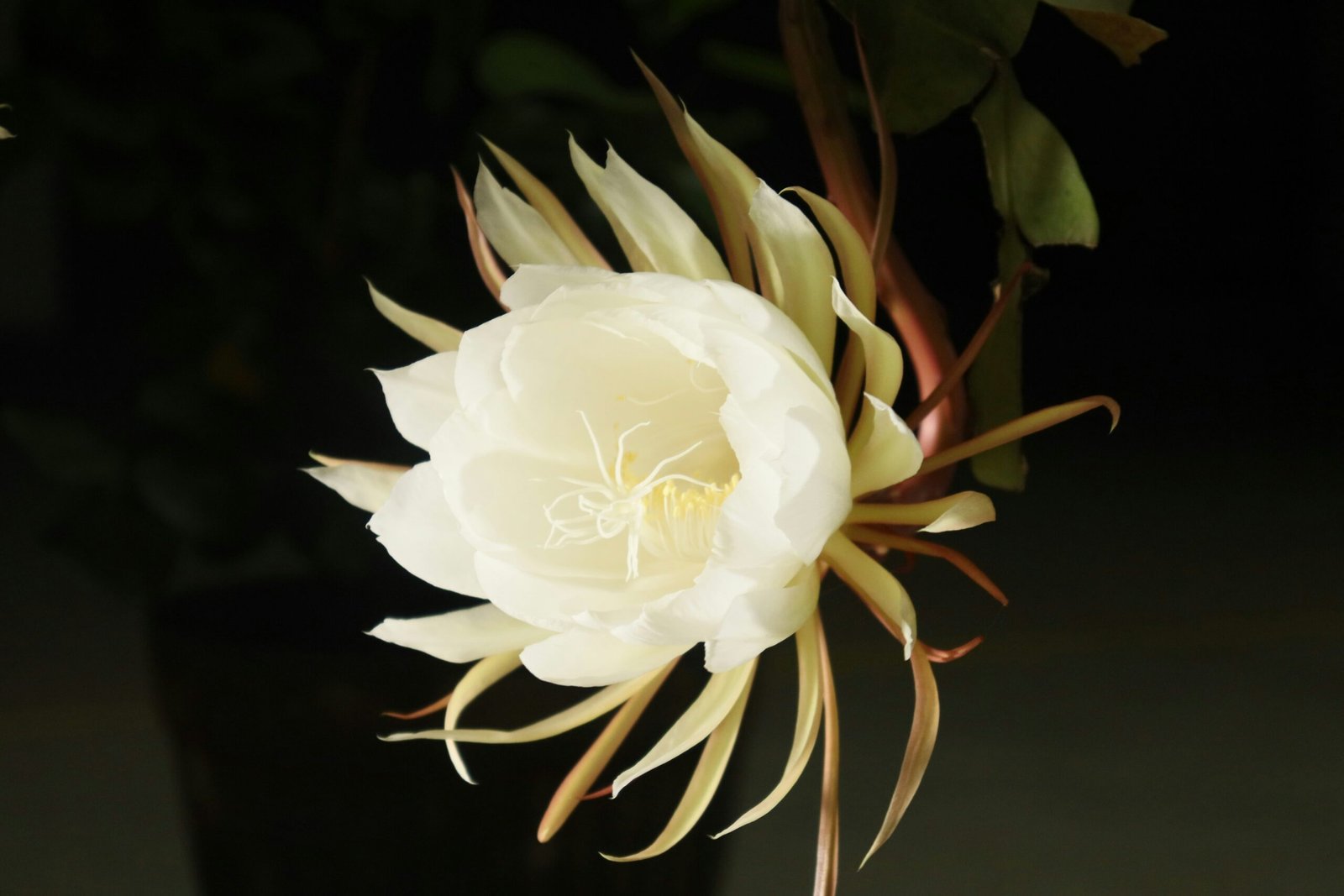
- Epiphyllum oxypetalum
- A night-blooming cactus often grown in homes
- Blooms once a year at night
- Commonly (but incorrectly) called Brahma Kamal in urban India
In religious and pilgrimage contexts, Saussurea obvallata is the culturally authentic Brahma Kamal.
Brahma Kamal in Hindu Spiritual Tradition
In Hindu belief systems, the flower is associated with Lord Brahma, the creator of the universe and one of the Trimurti. The name Brahma Kamal is commonly interpreted as “the lotus of Brahma.”
Scriptural and iconographic traditions depict Brahma as:
- seated on a lotus emerging from Lord Vishnu’s navel
- symbolizing creation, cosmic order, and knowledge
Although Brahma Kamal is not directly mentioned in the Vedas, later Hindu traditions, folklore, and pilgrimage practices have elevated the flower’s spiritual status, especially in the Himalayan belt.
Role in Pilgrimage and Temple Rituals
Brahma Kamal holds special importance in Uttarakhand’s Char Dham and Panch Kedar circuits. It is traditionally offered at:
- Kedarnath
- Badrinath
- Tungnath
- Madhyamaheshwar
The flower is considered:
- a symbol of divine grace
- an offering of humility rather than commerce
- not meant to be bought or sold, according to local custom
For many pilgrims, merely witnessing the flower in bloom is regarded as spiritually auspicious.
Blooming Cycle and Symbolism
In its natural habitat, Saussurea obvallata:
- blooms during the short Himalayan summer
- thrives in extreme cold, low oxygen, and rocky terrain
- survives where few flowering plants can
This resilience has made it a symbol of:
- spiritual endurance
- purity in adversity
- transcendence over material conditions
The night-blooming mythology, often attributed to the cactus variety, has nevertheless reinforced the flower’s mystique in popular belief.
Medicinal and Ethnobotanical Uses
Traditional Himalayan communities have used Brahma Kamal in:
- herbal remedies
- wound healing
- respiratory treatments
However, modern conservation guidelines strongly discourage wild harvesting, as over-collection has significantly reduced natural populations.
Climate Change and Conservation Challenges
In recent years, Brahma Kamal has become an indicator species for climate stress in the Himalayas.
Major threats include:
- rising temperatures
- shrinking alpine zones
- unregulated pilgrimage footfall
- illegal harvesting
Recognizing this, Uttarakhand’s forest and horticulture departments have initiated:
- nursery-based conservation programs
- controlled cultivation in districts such as Chamoli
- awareness campaigns linking spirituality with ecological responsibility
The flower’s survival is now tied not only to faith, but to environmental stewardship.
Conclusion: Sacredness in the Age of Sustainability
Brahma Kamal’s significance today extends beyond mythology. It stands as:
- a sacred symbol in Hindu belief
- a cultural anchor in Himalayan traditions
- a fragile species threatened by climate change
Preserving Brahma Kamal requires rethinking how devotion is practiced, shifting from extraction to reverence, from possession to protection.
In doing so, the flower continues to bloom, not just as an object of worship, but as a reminder of humanity’s responsibility toward the natural world.
Bibliography & Sources
- Botanical Survey of India – Saussurea obvallata
https://bsi.gov.in - Uttarakhand Forest Department – State Flower Conservation Programs
https://forest.uk.gov.in - Ministry of Environment, Forest and Climate Change (MoEFCC), India
https://moef.gov.in - Encyclopedia of Hinduism – Lotus Symbolism
https://www.britannica.com - Down To Earth Magazine – Himalayan Climate Impact Reports
https://www.downtoearth.org.in
For deeper context on these power tactics, see our Intelligence Notes & Critical Reads.