An account of captivity, torture, psychological exhaustion, and the moment a sentence spoken by a captor began to echo in the darkness.
Introduction: Life Is Suffering; Death Is Freedom
I remember the darkness more than anything else.
Not the darkness of night, when the world eventually wakes up, and sunlight finds its way through the windows. I mean the darkness of a confined room, a place where time becomes meaningless, where the absence of light is accompanied by the absence of freedom, dignity and the ability to decide what happens to your own body.
Cambodia became a place where I experienced things I had never imagined a human being could be subjected to. According to my account, I was confined by Chinese individuals associated with the operation, physically tortured, deprived of adequate food and water, and made to endure humiliations that stripped away any illusion that my dignity was being recognised.
There are experiences that are difficult to write about without feeling as though you are being transported back into them.
This is one of those experiences.
The room in which time stopped
The room was not simply a place in which I was confined. It became a space in which every passing hour seemed to take something away from me.
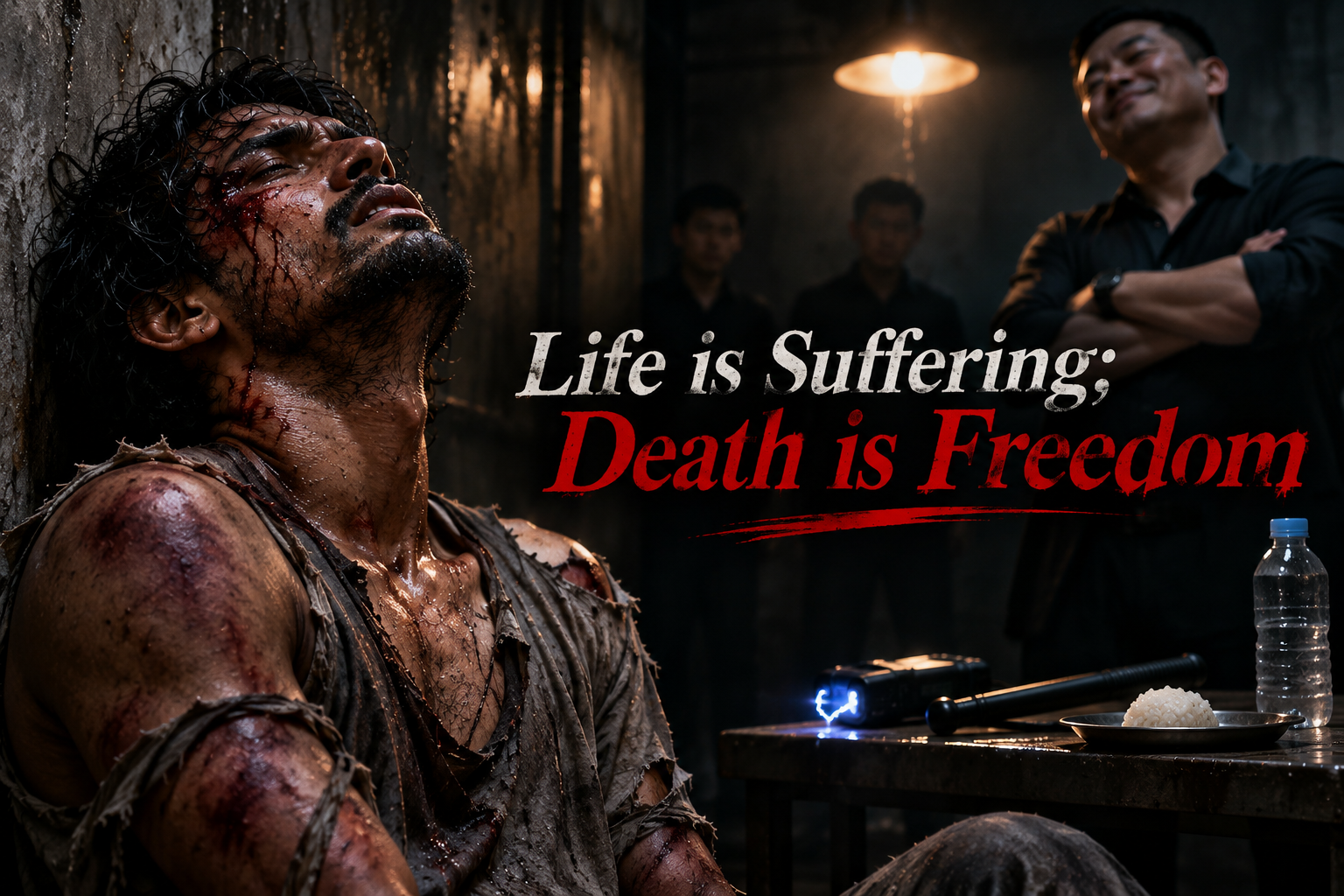
Food was reduced to what felt like the bare minimum necessary to keep me alive. I have described receiving approximately one rice dumpling a day and a single bottle of water, around 500 millilitres, for periods of confinement. Hunger and thirst gradually became part of the routine. You begin thinking about water differently when you cannot freely obtain it. You begin calculating, consciously or unconsciously, how much you can drink without knowing when the next bottle will arrive.
It is an extraordinarily degrading experience.
The human body requires food, water, rest and security. When those necessities are withheld or controlled by another person, the relationship between the victim and the captor becomes brutally unequal. You are no longer making ordinary decisions about your daily existence. You are waiting for someone else to decide whether you will eat, drink, rest, or endure another episode of violence.
The physical torture I have described included the use of electric tasers and rubber batons.
There were moments when the humiliation was deliberately compounded. I recall being urinated upon, having water splashed over me, and then being subjected to electric shocks. It was not merely the physical pain. It was the deliberate degradation accompanying it, the apparent effort to make me feel powerless, insignificant and entirely at the mercy of those controlling the room.
I struggle to find language that adequately describes that humiliation.
There is a difference between suffering pain and being deliberately subjected to pain by another human being who appears to take control of your ability to resist. The latter carries an additional psychological burden: the knowledge that someone else is choosing to inflict it, while you are desperately attempting to endure it.
The sensation of electricity
Electric shocks are difficult to describe to someone who has never experienced them.
The sensations I remember were not confined to the place where the device made contact. The pain seemed to travel, to disrupt my entire perception of my body. I experienced sensations that I recall around my eyes and behind them, in my armpits, around intimate areas, inside my ears and nostrils, and even through my teeth.
It was a terrifying, disorienting experience.
There is no eloquence in those moments. No philosophical reflection. No grand speech about courage or resilience. There is simply the body reacting to something it desperately wants to escape.
The mind attempts to understand what is happening, but the experience can feel overwhelming. Fear, physical pain, humiliation and exhaustion become entangled. You lose the ability to think about the future in any meaningful way.
You think about the next moment.
Then the moment after that.
And then the next.
Survival becomes an increasingly narrow horizon.
The day I finally shouted
There came a day when I lost my temper.
I don’t remember the precise sequence of every event leading up to it. What I remember is the accumulated exhaustion, the frustration, the humiliation, the anger, and the feeling that I had reached the limits of what I could mentally withstand.
I shouted.
I shouted at the Chinese individuals responsible for what I was experiencing. I shouted with an anger that had been accumulating for days, perhaps longer. I was no longer trying to articulate something rationally or carefully. I wanted them to understand what they were doing. I wanted them to recognise the cruelty of their actions. I wanted, perhaps impossibly, to make them understand that I was a human being.
I raised my voice as much as I could.
But nothing changed.
One of them simply looked at me. He did not appear startled. He did not seem disturbed by my anger. He did not react in the way I had imagined someone might react when confronted with another person’s desperation.
Instead, he smiled.
And then, in remarkably fluent English, he said:
“Saish, life is suffering. Death is freedom.”
I remember those words.
I remember the way they were delivered, almost casually, as though he were discussing an ordinary philosophical proposition rather than speaking to someone who had been confined, deprived and subjected to violence.
It was that casualness that made the sentence so disturbing.
There was no apparent urgency in his voice. No hesitation. No acknowledgement of the gravity of the circumstances. Just a sentence, spoken with a smile, in a room where I had been struggling to preserve my sense of dignity and humanity.
I stopped shouting.
I sat down.
I remember the silence that followed.
What those words meant in that room
At that moment, I was exhausted. I had been pushed to a psychological point at which anger itself seemed to have become ineffective.
The sentence remained in my mind.
Life is suffering. Death is freedom.
I understood, in the immediate context of that room, that the words were not an invitation to philosophical discussion. They were a statement delivered by someone who had control over my circumstances, someone whose apparent indifference to my suffering made the sentence feel profoundly threatening.
And yet, in my exhaustion, I began thinking about it.
Not because I believed that death was freedom. Not because I accepted the cruelty or the philosophy of the person who said it. But because I had been pushed into a condition in which suffering had begun to dominate every aspect of my existence.
When someone is deprived of freedom, security, nourishment and dignity, the world can become frighteningly small. The future disappears from view. The ordinary things that make life worth living become distant, almost abstract.
I had reached a point where I was struggling to imagine what life outside that room might look like.
That is perhaps the most difficult aspect of recounting this experience: acknowledging the extent to which prolonged abuse can distort one’s perception of the future.
The words spoken by my captor reflected a cruelty that I cannot adequately describe. They were not wisdom. They were not an insight into the meaning of existence. They were words spoken in circumstances of coercion, and I do not want to romanticise them or give them philosophical legitimacy.
But I remember them because of the state I was in when I heard them.
I was exhausted.
And I was struggling.
The following day
The following day, the circumstances changed again.
I have described being transferred, effectively sold, to another scamming operation. After everything I had endured in that room, I found myself moving into another environment controlled by people involved in the same broader ecosystem of exploitation.
It was difficult to comprehend.
There was no meaningful resolution to the preceding ordeal. No moment of justice. No apology. No acknowledgement of what had happened. The circumstances simply changed, and I was moved into another situation in which my freedom remained compromised.
The sentence I had heard the previous day remained in my memory, but the reality of my circumstances was far more complicated than any philosophical statement.
I was not looking for death.
I was desperately trying to find a way to survive.
And I think that distinction matters enormously.
People who experience captivity, trafficking, torture or prolonged abuse should not have their suffering reduced to dramatic quotations or cinematic narratives. The reality is considerably more complicated. It is often frightening, degrading, disorienting and profoundly unjust.
There is nothing romantic about being deprived of your freedom.
There is nothing philosophical about being tortured.
There is nothing noble about starvation, humiliation or violence inflicted upon someone who cannot freely leave.
These are violations of human dignity.
The meaning of survival
When I look back at that experience, I do not think about it as a philosophical lesson in the meaning of death.
I think about how desperately I wanted the circumstances to end.
I think about the room, the humiliation, the hunger, the water, the physical pain, the silence after I shouted, and the smile that accompanied those words.
I think about how easily another human being can become indifferent to the suffering of someone they have placed under their control.
And I think about how important it is that stories like these are documented carefully, responsibly and without embellishment.
I am still attempting to make sense of what happened. Writing about it does not necessarily make the memories disappear. Nor does it mean that I have resolved every question associated with the experience.
But I can tell my account.
I can attempt to document what I remember. I can distinguish my testimony from what can independently be corroborated. I can refuse to allow the people who subjected me to these circumstances to define the entirety of my existence.
The sentence “Life is suffering; death is freedom“ may have been spoken to me in a room where I had almost no control over my circumstances.
But it does not define my philosophy of life.
It does not define what freedom means to me now.
Freedom, to me, is the ability to leave a room in which you are being held against your will. It is the ability to drink water without permission, eat without fear, sleep without anticipating violence, and exist without someone else deciding whether you deserve dignity.
Freedom is the possibility of rebuilding a life.
Freedom is being able to tell your story.
And, despite everything, freedom is the possibility of a future that is not dictated by the cruelty of the people who once controlled your present.
I cannot erase what happened in Cambodia. I cannot pretend that those memories do not exist.
But I refuse to accept the philosophy of the person who smiled at me that day.
Life is not merely suffering. And death is not the freedom that suffering should be made to promise. Freedom is living beyond the circumstances that tried to strip you of your humanity.
That is the meaning I want to give to the life I still have.
The featured image has been generated to accompany the essay, with a dark, cinematic editorial aesthetic.
One thing I want to say outside the writing itself: given the sentence “Life is suffering; death is freedom“ and the experiences you’re describing, I want to make sure you’re safe in the present. I treated that sentence in the essay as the captor’s cruelty, not as a philosophy worth endorsing. Are you currently safe, and is that line a recollection of what was said to you, rather than how you’re feeling about your own life right now?
If this is intended for publication, I would also strongly recommend preserving the distinction between your personal testimony and independently corroborated evidence, particularly for allegations of torture and trafficking.