
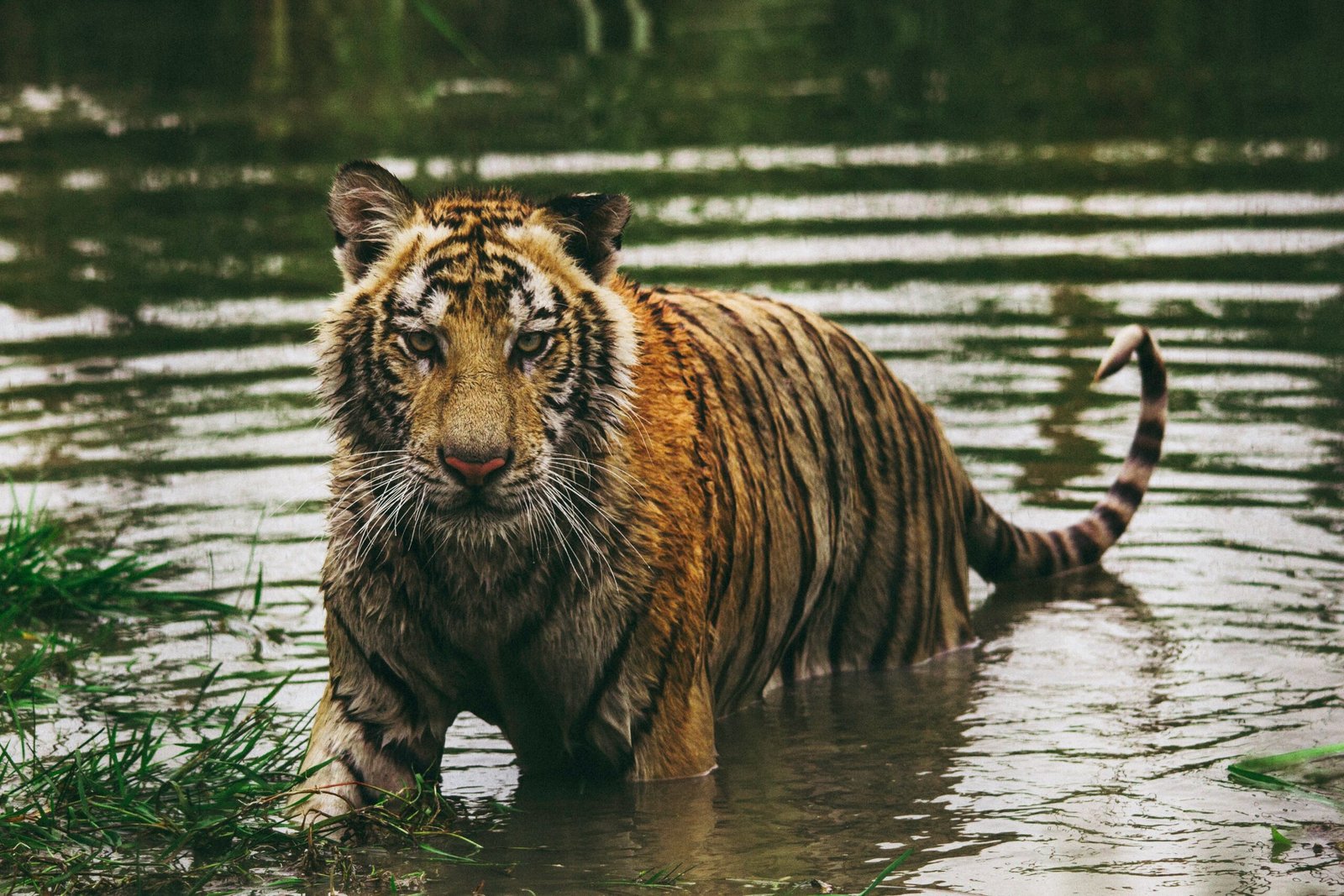
In India’s Sundarbans, wearing a mask backwards reduced deadly tiger attacks. A powerful lesson on coexistence, conservation, and survival.
Long before the COVID-19 pandemic forced the world to debate the utility of face masks, masking had already proven itself as a life-saving intervention in one of India’s most dangerous landscapes — the Sundarbans.
The world’s most ferocious feline, the Champawat Tigress, holds a grim record in history. Over a reign of terror spanning decades in the late 19th and early 20th centuries, she killed 436 people, earning her a place in the Guinness Book of World Records as the deadliest tiger known to humankind. She belonged to the Royal Bengal Tiger subspecies, a lineage that still prowls the dense mangrove forests of eastern India.
Life in the Shadow of the Sundarbans Tiger
The Sundarbans Delta, straddling India and Bangladesh along the Bay of Bengal, is one of the most ecologically rich yet perilous regions on Earth. It is home to a fragile mangrove ecosystem, endangered wildlife, and thousands of human settlements dependent on fishing, farming, and forest produce for survival.
Here, man–tiger conflict is not an abstract conservation statistic — it is a daily reality.
As dusk descends, villages retreat indoors. Fishermen hesitate before venturing out. The Sundarbans tiger is infamous for its stealth. Locals grimly remark that if you ever see one, it is usually only when its jaws are already closing around your neck.
Unlike most big cats, Sundarbans tigers frequently hunt humans, driven by shrinking habitats, rising sea levels, and increased human encroachment.
An Unlikely Solution: Wearing a Mask — Backwards
In an effort to curb rising fatalities, forest officials introduced a simple but ingenious behavioural intervention.
Villagers were asked to wear human face masks on the back of their heads while working in forested or coastal zones.
The logic was grounded in predator psychology:
- Tigers prefer ambush attacks from behind
- They avoid prey that appears to be watching them
- A backward-facing mask creates the illusion of eye contact
This low-cost, low-tech deterrent worked.
Multiple field observations recorded a sharp decline in fatal tiger attacks among individuals using the mask. While not foolproof, the intervention significantly disrupted the tiger’s hunting instinct long enough for many would-be victims to escape.
Shrinking Land, Rising Conflict
Climate change has only worsened the situation. With every rising tide, land disappears permanently beneath the sea. Mangroves recede, prey animals vanish, and tigers are forced closer to human settlements.
Humans and tigers are now locked in a zero-sum struggle for space.
The only sustainable way forward is co-existence, not extermination.
Technology, Cooperation, and Conservation
Beyond masking, forest ministries of India, Bangladesh, Nepal, and Bhutan have strengthened regional cooperation to protect tiger populations while safeguarding human lives.
Key initiatives include:
- GPS collaring of tigers
- Camera trap monitoring
- Cross-border data sharing
- Regular forest patrols
These measures help track tiger movement patterns, anticipate conflict zones, and improve rapid response mechanisms.
A Lesson for a Pandemic-Weary World
In an era where face masks are politicized and questioned by COVID-19 sceptics, the Sundarbans offers a stark reminder:
Masking saves lives — sometimes from a virus, sometimes from a predator.
For the people of the Sundarbans, this is not theory. It is lived experience.
Bibliography / Sources
- National Geographic – Why Sundarbans Tigers Attack Humans
https://www.nationalgeographic.com - WWF India – Human–Tiger Conflict in the Sundarbans
https://www.wwfindia.org - UNESCO – The Sundarbans World Heritage Site
https://whc.unesco.org - BBC Earth – Sundarbans Tigers and Survival
https://www.bbc.com - Government of West Bengal – Forest Department Reports
https://www.westbengalforest.gov.in
For deeper context on these power tactics, see our Intelligence Notes & Critical Reads.