
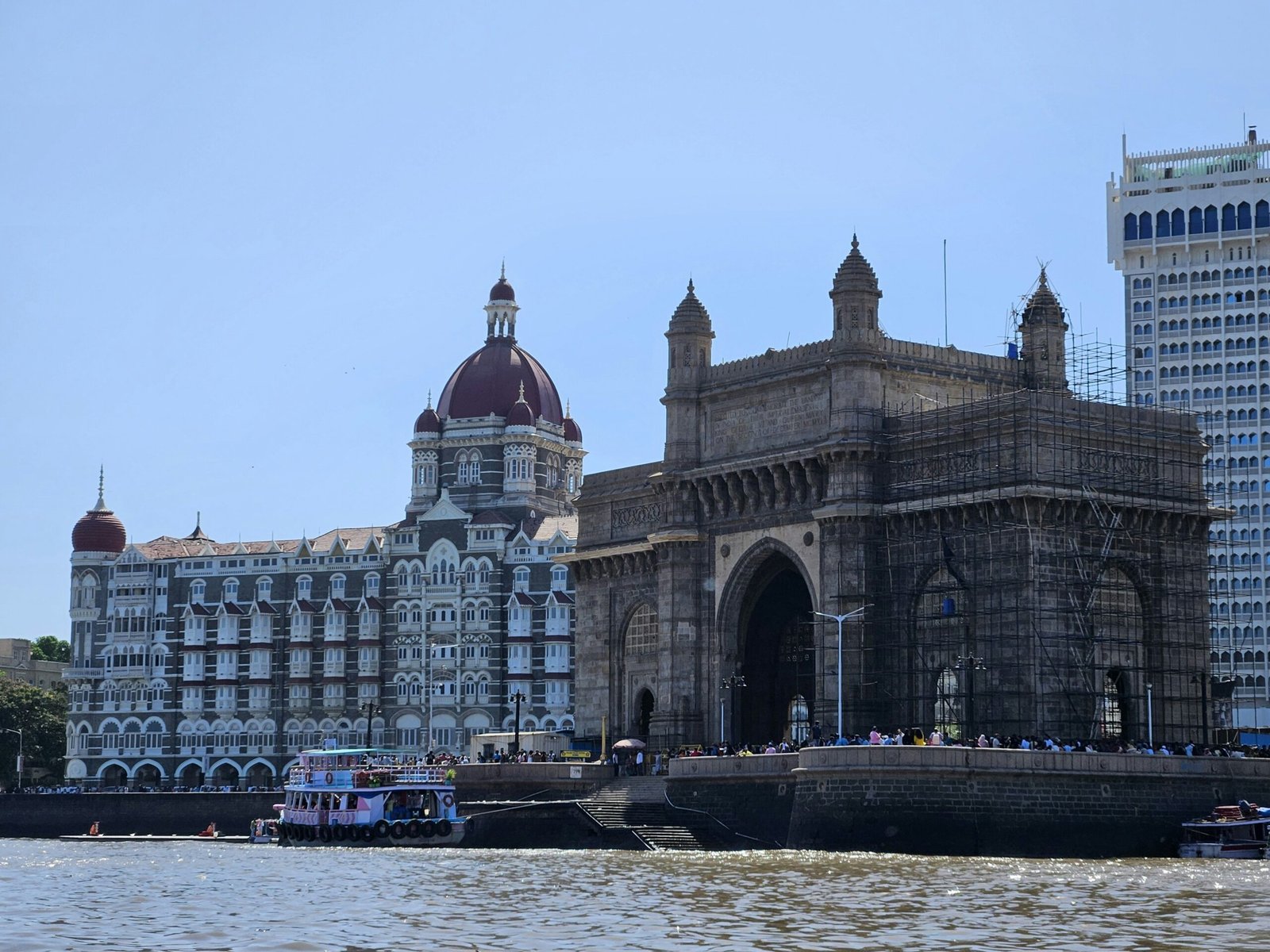
Jamsetji Tata transformed personal discrimination into a vision that created The Taj Mahal Palace Hotel — a symbol of India’s pride, resilience, and industrial spirit.
One evening, Jamsetji Nusserwanji Tata took a foreign friend to dinner at one of the few respectable hotels in Bombay, as Mumbai was then known. At the entrance, the doorman held the door open for Jamsetji’s guest — but stopped Jamsetji himself. The hotel, he was told, was “FOR EUROPEANS ONLY.” His foreign companion was welcome. He, an Indian, was not.
That moment stayed with him. Later, Jamsetji discovered that nearly all the reputable hotels in Bombay catered exclusively to Europeans, and some outright forbade Indians from entering — regardless of stature, merit, or distinction.
It was in that humiliating moment that a decision crystallised.
Jamsetji resolved to build a hotel that would not merely equal European establishments, but surpass them in every regard — a hotel that would become a symbol of Indian dignity, hospitality, and ambition. A hotel that the world would travel to India to see.
Thus began the idea that would later become The Taj Mahal Palace Hotel.
Jamsetji Tata: The Man Behind India’s Industrial Soul
Jamsetji Nusserwanji Tata, founder of the Tata Group — now India’s largest conglomerate — remains one of the most visionary industrialists the world has known. He laid the intellectual foundation for India’s early industrialisation, established the city of Jamshedpur, and ignited national aspirations long before independence.
Pandit Jawaharlal Nehru would later describe him as a “One-Man Planning Commission.”
Few men deserved the title more.
Imagining the Taj: Before the Gateway, Before the City We Know
The Taj Mahal Palace stands today as a sentinel overlooking the Arabian Sea. To its left rises the Gateway of India, built in 1911 to commemorate the visit of King George V — the first and last British monarch to set foot in India.
At the time Jamsetji conceived the hotel, neither the Gateway nor the harbour skyline existed. There were no sweeping promenades, no breakwaters, no oil refineries glowing in the distance.
Yet Jamsetji saw what could be, not what was.
A Vision Built by Hand and Heart: Jamsetji’s European Tour
Despite having a weak heart, Jamsetji personally travelled through Europe in 1902 to procure the finest materials and machinery for his dream hotel. He walked through the industrial streets of Düsseldorf and other European cities selecting:
- soda and ice-making equipment
- a commercial laundry system
- state-of-the-art elevators
- electric generators
The Taj would go on to have amenities far ahead of its time:
- a Turkish bath
- its own post office
- a chemist’s shop
- and a resident doctor available around the clock
This was not just hospitality. It was technological leadership in colonial India.
A Grand Opening for a Grand Idea — 16 December 1903
When The Taj Mahal Palace opened its doors on 16 December 1903, only seventeen guests checked in. But the hotel was the first public building in Bombay to be illuminated by electric lamps.
Each evening, as dusk settled over the harbour, the lamps were switched on. Crowds gathered outside, marvelling at the golden glow bathing the hotel’s façade, a spectacle the city had never seen before.
Legacy: Pride, Pain, and an Unbroken Spirit
More than a century later, The Taj Mahal Palace stands as tall and iconic as the Statue of Liberty — a monument that welcomes travellers from across the world. For Indians, the Taj evokes a tapestry of emotions.
On one hand, it represents the pride, prestige, and aspiration of a nation determined to define its own destiny.
On the other, its memory is stained by the tragic images of the 26/11 terror attack — an event that shook Mumbai and the world. Though the hotel bears no visible scars today, the echo of gunfire still reverberates through memory. The resilience of the staff and the rebuilding that followed became a symbol of Mumbai’s indomitable spirit.
Through triumph and tragedy, the Taj remains an enduring testament to Jamsetji Tata’s belief:
India deserved nothing less than the best.
Bibliography & Sources
- Lala, R. M. Beyond the Last Blue Mountain.
https://www.amazon.in/Beyond-Last-Blue-Mountain-JRD/dp/0143062227/ - Tata Archives – History & Timeline
https://www.tata.com/about-us/timeline - The Taj Mahal Palace – Official Taj Hotels Page
https://www.tajhotels.com/en-in/our-hotels/the-taj-mahal-palace-mumbai/ - Gateway of India – Official Government Heritage Listing
https://mumbaicity.gov.in/tourist-place/gateway-of-india/ - INTACH – Indian National Trust for Art and Cultural Heritage
https://www.intach.org/ - Times of India – 26/11 Archive
https://timesofindia.indiatimes.com/topic/26/11-attack - The Indian Express – Heritage Articles
https://indianexpress.com/ - UNESCO – Mumbai Cultural Heritage
https://whc.unesco.org/
For deeper context on these power tactics, see our Intelligence Notes & Critical Reads.