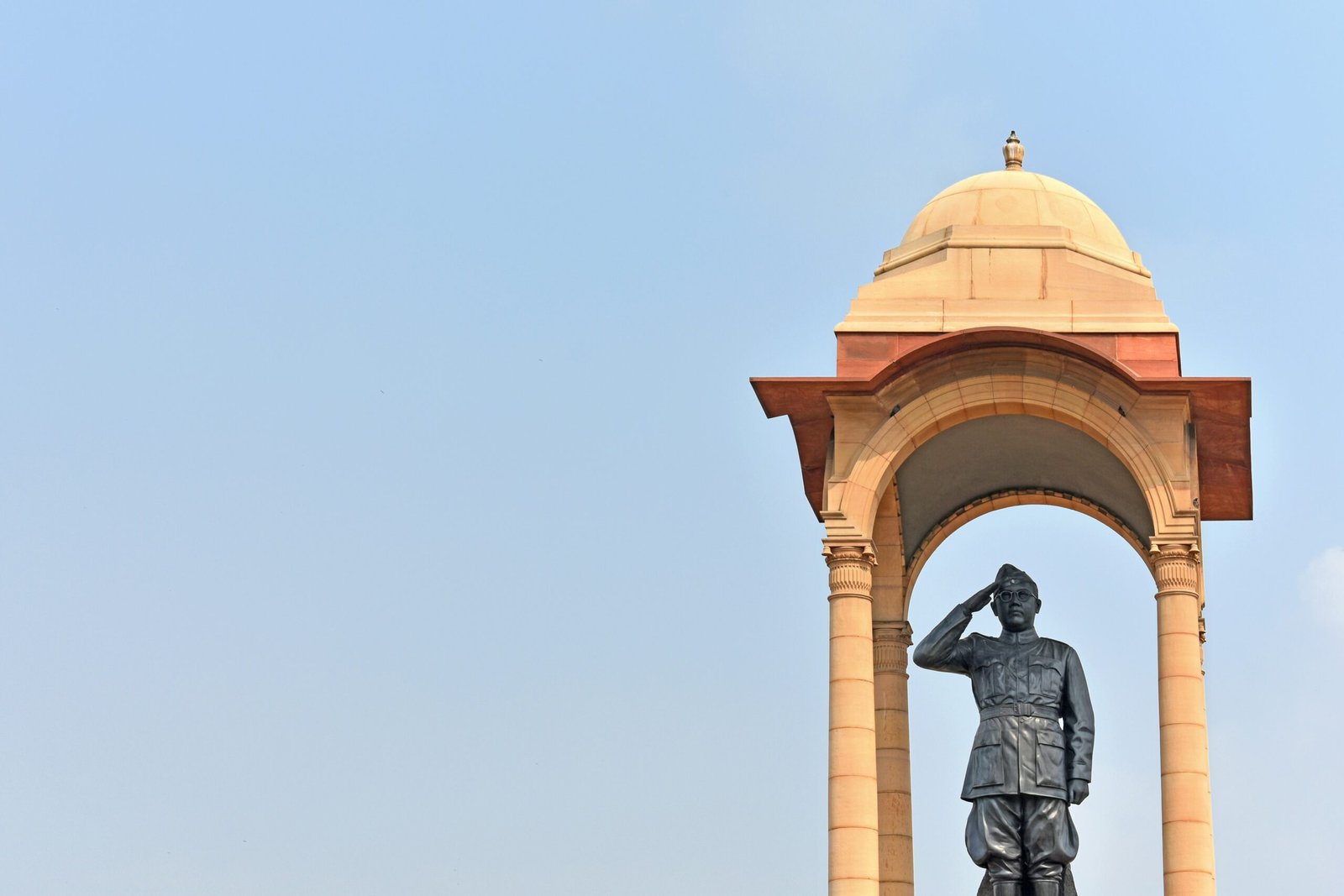
Subhas Chandra Bose remains one of the most enigmatic figures of the Indian freedom struggle — a strategist, a revolutionary, and the architect of the Azad Hind Fauj. He forged military alliances with Imperial Japan, secured control over the Andaman and Nicobar Islands, and built the ideological foundation for what would later become the Indian National Army (INA). Yet, the circumstances of his death in August 1945 remain an unresolved historical riddle.
In 2015, Prime Minister Narendra Modi declassified hundreds of previously sealed files on Netaji, hoping to shed light on the mystery. The files revealed fragments, reports, and diplomatic cables — but a crucial eyewitness narrative remained largely unheard. That testimony appears in The War Diary of Asha San, written by Asha San, a young lieutenant of the Azad Hind Sena and daughter of Netaji’s close confidants Anand Mohan Sahay and Sati Sen.
According to Lieutenant Asha San’s family account, the day of the crash was deceptively calm. Netaji and Colonel Habib ur Rahman were scheduled to travel from Saigon to Tokyo via Taihoku, and then onward to Manchuria. Weather conditions were clear — no turbulence, no storm warnings. But moments after takeoff, catastrophe struck. The aircraft crashed violently on the runway, igniting instantly.
Colonel Habib suffered severe burns to his face and hands as he escaped the flaming wreckage. Netaji, seated near a fuel tank, suffered catastrophic burns as the gasoline ignited. Habib briefly lost consciousness but awoke to find Netaji’s half-burnt body lying near the wreckage.
Weak but conscious, Netaji spoke first.
“Habib, how are you?”
Habib replied that he was alive, and asked the same of his commander.
Netaji, sensing the inevitable, whispered his final message:
“I may not live much longer. When you go to India, tell our countrymen that Subhas lived bravely and died bravely. India will soon be free. That is a certain future.”
He soon lost consciousness.
Rescuers transported the survivors to the Taihoku military hospital, where doctors fought to save him. At approximately 8:30 p.m., Netaji Subhas Chandra Bose succumbed to his injuries.
News of his death was met with silence and disbelief across India. The British administration privately celebrated, while Japan mourned deeply — noting that “India has lost her lion.”
Decades later, even with hundreds of declassified documents, questions remain. Was the crash truly an accident? Were all accounts consistent? Was the sudden declassification in 2015 a sincere act of transparency or a political overture to Bengal during an electoral cycle?
The mystery endures — but Netaji Subhas Chandra Bose’s final words, preserved in a soldier’s diary, remain a chilling testament to his unshakeable resolve.
Bibliography / Sources
- The War Diary of Asha San – Asha San (primary eyewitness record)
- Netaji Subhas Chandra Bose Files Declassification, 2015 – Government of India Archives:
https://netajipapers.gov.in - Testimony of Col. Habib ur Rahman – released via declassified communications
- INA Historical Records – National Archives of India
- Tokyo War Records Bureau documentation on the Taihoku incident
For deeper context on these power tactics, see our Intelligence Notes & Critical Reads.