An investigation into how Russia Recruits Foreign Fighters in Africa and Latin America, examining statistics, online recruitment networks & trafficking allegations.
Introduction: Russia Recruits Foreign Fighters in Africa and Latin America
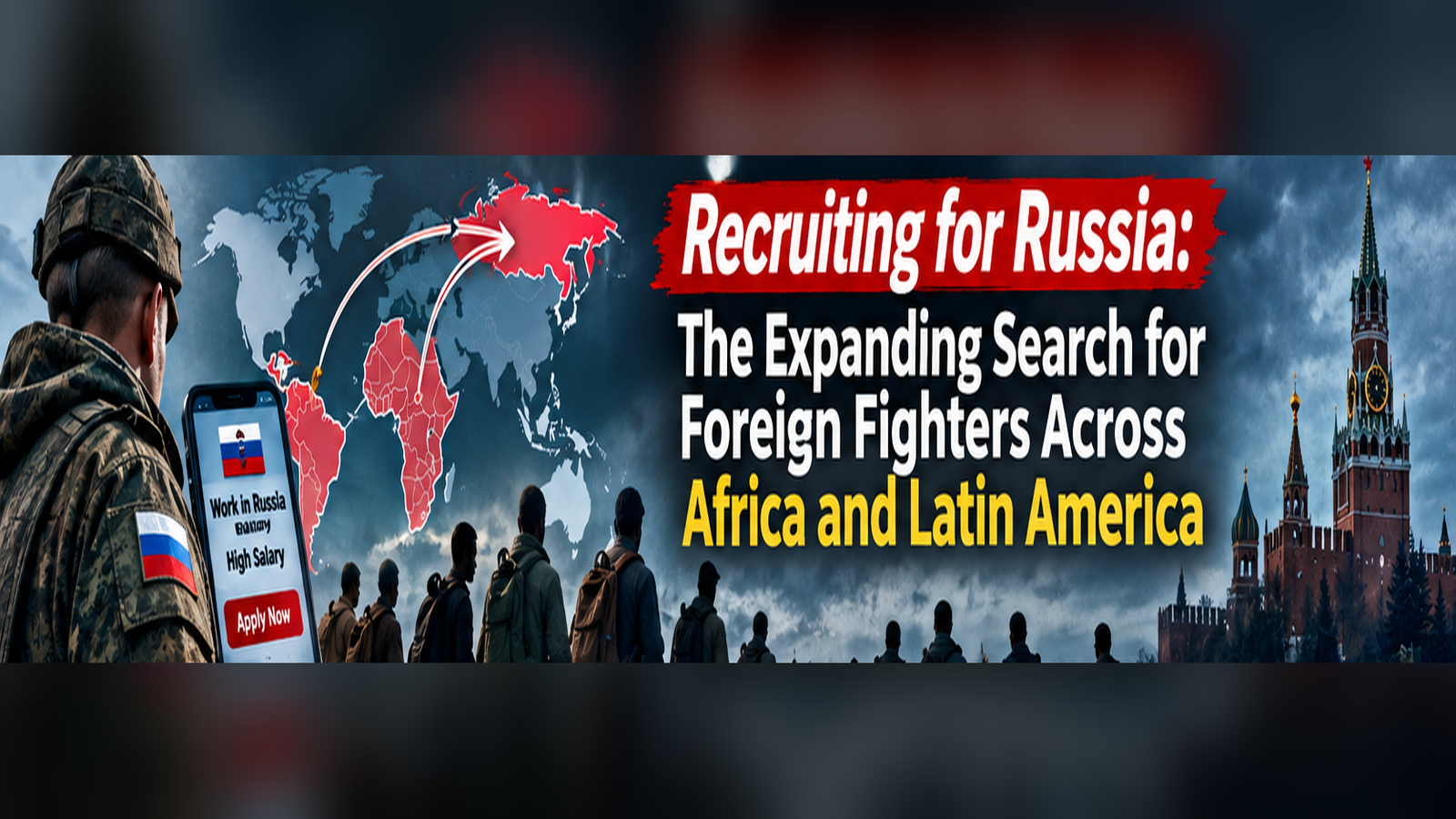
Russia’s recruitment of foreign nationals for its war against Ukraine is no longer confined to neighbouring states or traditional migration corridors. Evidence published during 2026 points to an expanding recruitment footprint across Africa and Latin America, where online job advertisements, local intermediaries, messaging applications and promises of high salaries or Russian citizenship have brought thousands of people into contact with Russian military recruitment channels.
The scale is significant. Ukrainian records cited by the Ukrainian outlet Hromadske identified 1,449 Colombian nationals and 503 Peruvians who signed contracts with Russia’s armed forces during the first nine months of 2026. In Africa, the same reporting identified 699 recruits from Burundi and 530 from Zimbabwe during that period. A separate October report citing Ukrainian data put the number of African nationals from 43 countries who had signed contracts at approximately 5,400 by 1 October 2026.
These numbers reveal a widening international recruitment effort. They do not, however, establish that every individual was deceived, trafficked or compelled to enlist. Some people knowingly entered military service; others have described misleading job offers, coercion, withheld documents, threats or a military contract they did not understand.
This investigation examines the emerging evidence, the countries most prominently identified, and the recruitment practices documented by journalists and human rights organisations.
The changing geography of recruitment
Russia’s use of foreign nationals in its armed forces has developed into a global phenomenon. A joint report published in April 2026 by the International Federation for Human Rights (FIDH), Truth Hounds and the Kazakhstan International Bureau for Human Rights described a recruitment system operating across more than 130 countries. The organisations estimated that at least 27,000 foreign nationals had been recruited since the full-scale invasion began in February 2022.
The report drew on interviews with prisoners of war, former Russian military personnel, open-source research and consultations with regional experts. It described recruitment targeting people facing economic insecurity, precarious migration status, detention or limited employment opportunities.
By October 2026, Ukrainian authorities were reporting approximately 45,900 foreign nationals and residents of unrecognised territories with Russian military contracts. The same data identified approximately 5,400 people from 43 African countries.
The figures are not a complete independent census. They are records compiled by Ukrainian authorities and should be attributed accordingly. Nevertheless, the scale and geographical spread are consistent with investigations by international media and human rights organisations.
The recruitment map is also changing. The Insider reported in October that Ukrainian intelligence data showed a sharp rise in enlistment from Burundi and Zimbabwe, while recruitment pressure had shifted towards countries where local authorities had taken stronger action against Russian recruitment activity.
Africa: recruitment expands beyond established source countries
Africa has become a major area of concern for governments monitoring the recruitment of their nationals into Russia’s military.
The available evidence identifies recruits from dozens of African countries, but the quality and period of the data vary. Some figures are contract totals for the first nine months of 2026; others are identified individuals in a separate dataset or estimates made by national authorities.
Burundi and Zimbabwe: a sharp increase in 2026
The figures for Burundi and Zimbabwe illustrate the speed of the recent expansion.
According to Ukrainian intelligence data cited by The Insider on 26 October 2026, 699 Burundian citizens signed contracts with Russia’s Ministry of Defence between January and September 2026. The corresponding figure for all of 2025 was 30.
Zimbabwe showed a similar increase. The reported number rose from 65 recruits in 2025 to 530 in the first nine months of 2026.
Together, the two countries accounted for 1,229 reported contracts during the nine months, compared with 95 in the whole of 2025.
The figures do not independently establish the circumstances of every enlistment. They do, however, indicate a substantial change in recruitment activity and raise questions about the role of intermediaries, recruitment agencies and local facilitators.
Kenya: families seeking answers
Kenya has become one of the most visible African cases.
In February 2026, Kenya’s National Intelligence Service told lawmakers that more than 1,000 Kenyans had been recruited into the Russian army, according to reporting cited by The Insider. The Kenyan government subsequently raised the issue with Moscow and sought the return of citizens already serving.
The numbers reported by different sources are not identical. An October country-level dataset identified 841 Kenyans and documented 76 deaths. Separately, Kenyan Foreign Minister Musalia Mudavadi told Parliament in early October that authorities had information about 354 Kenyans who had become participants in the war, of whom 84 were believed to have been killed or gone missing.
These figures measure different things: identified individuals in a research dataset, government-held information about participants, and people believed dead or missing. They should not be merged into one total.
Individual accounts have also drawn attention to the methods used to bring Kenyans to Russia. Hromadske reported the case of athlete Evans Kibet, who said he travelled expecting to participate in a cultural or sports-related opportunity but was asked to sign documents in Russian that he did not understand. He later discovered that he had signed a military contract.
The case illustrates why recruitment investigations must examine the full journey: the original offer, the intermediary, the travel arrangements, the documents signed and the circumstances in which a person entered military service.
Egypt, Cameroon, Ghana and Nigeria
An October 2026 country-level dataset reported 407 identified Egyptian recruits, 383 Cameroonians, 337 Ghanaians and 214 Nigerians. It also listed 108 Ugandans, 69 South Africans and 13 Sierra Leoneans.
The same dataset recorded 81 deaths among the identified Egyptians, 104 among Cameroonians, 85 among Ghanaians and 24 among Nigerians. These figures should be understood as documented deaths within that dataset, not final national casualty totals.
The cases also demonstrate that the recruitment picture is not uniform. National governments have different levels of information, different investigative capacities and different definitions of what counts as a recruited national. A country’s figure may reflect named records, intelligence assessments, confirmed deaths or contracts recorded by Ukrainian authorities.
For that reason, the absence of a country from a published list cannot be interpreted as proof that no recruitment has taken place there.

Latin America: Colombia and Peru emerge in the latest contract records
Latin America has become another important recruitment region. The evidence is particularly prominent for Colombia, Peru and Cuba, although the available figures are not directly comparable.
Colombia: the largest recent recorded figure
Ukrainian records cited by Hromadske identified 1,449 Colombian nationals who signed contracts with Russia’s armed forces during January–September 2026. This is one of the largest country-level figures reported for Latin America in the period.
Colombia has a long history of military personnel and former soldiers seeking work abroad, including in private security and armed conflict environments. That background has created a market in which intermediaries can present overseas military or security work as a familiar employment proposition.
But the existence of a recruitment market does not establish that every Colombian recruit was deceived or trafficked. Some people may have understood that they were entering military service. Others have described being promised civilian work, better pay or a role that did not involve frontline combat.
An April 2026 investigation by EL PAÍS documented the account of a Colombian national who said he had enlisted after encountering a TikTok recruitment channel and being promised a monthly salary. He later described being sent into combat much earlier than expected.
The investigation also examined the role of intermediaries and companies operating in the international recruitment market. Such entities require individual verification: a company’s involvement in overseas recruitment does not automatically prove that it recruited a particular person for Russia.
Peru: more than 500 contracts in nine months
The same Ukrainian records identified 503 Peruvian nationals who signed Russian military contracts during the first nine months of 2026.
Families of Peruvians believed to have been recruited have sought answers from their government, according to reporting cited by EUvsDisinfo. The reports point to the importance of examining the recruitment process before travel: what job was advertised, who made contact, what documents were requested, and whether the military nature of the contract was disclosed.
The 503 figure is a contract count reported for a defined period. It is not a confirmed count of Peruvians currently deployed in Ukraine, nor does it establish how many were recruited through deceptive offers.
Cuba: a much larger estimate, with important limitations
Cuba occupies a prominent place in reporting about Latin American recruitment. In April 2026, EL PAÍS reported that Ukrainian military intelligence estimated approximately 20,000 Cuban citizens had been contracted by the Russian army.
That estimate is substantially higher than the country-level figures available for Colombia and Peru. It should therefore be treated with particular care. It is an intelligence estimate reported by a newspaper, not a publicly audited list of 20,000 named individuals. It cannot be directly compared with the January–September 2026 contract records for Colombia and Peru.
The same EL PAÍS investigation described a Cuban prisoner of war who said he had responded to a Facebook advertisement for civilian employment and later realised that he had been drawn into military service.
The Cuban case illustrates a broader investigative question: how are civilian employment propositions being used to attract candidates who may not understand the military obligations attached to the opportunity?
Brazil and Argentina: documented cases, but no reliable national totals
Brazilian nationals have also appeared in investigations. Amnesty International interviewed a Brazilian IT professional who said he believed he had accepted a technology job in Russia before being drawn into military service. The organisation also interviewed people from Colombia, Cuba, Egypt, Sierra Leone, Somalia and South Africa.
EL PAÍS described isolated cases involving Argentina and Brazil, but the public evidence reviewed for this article does not provide a reliable country-wide recruitment total for either country.
The responsible conclusion is therefore limited: cases have been documented, but a national count cannot be established from the sources available.
The recruitment mechanism: from a job offer to a military contract
The recruitment methods documented across Africa and Latin America show recurring patterns.
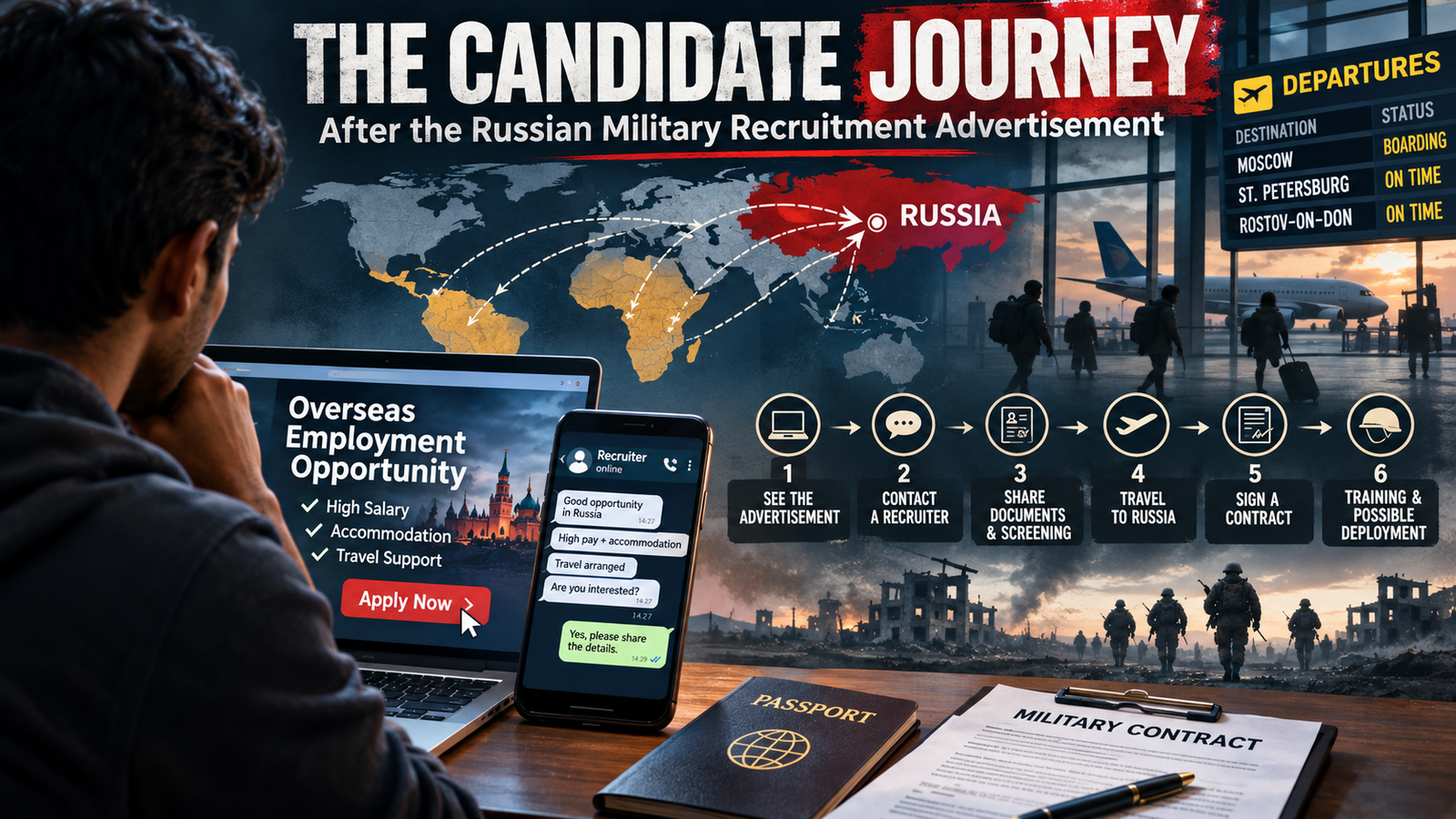
A candidate may first encounter a social media advertisement or a message circulated through a local contact. The offer may describe construction, driving, logistics, security, technology or other civilian work. A recruiter or intermediary may then move the conversation to WhatsApp or Telegram, request identity documents, arrange travel or provide instructions about a visa.
In some documented cases, candidates say the military nature of the work was concealed or misrepresented until they reached Russia. Others say they knew they were signing a military contract but did not understand the terms, the deployment risks or the restrictions that followed.
Amnesty International’s September 2026 briefing documented cases involving people from Brazil, Colombia, Cuba, Egypt, Sierra Leone, Somalia and South Africa. Interviewees described being approached through local agents or online advertisements, offered civilian roles and then directed into the Russian armed forces.
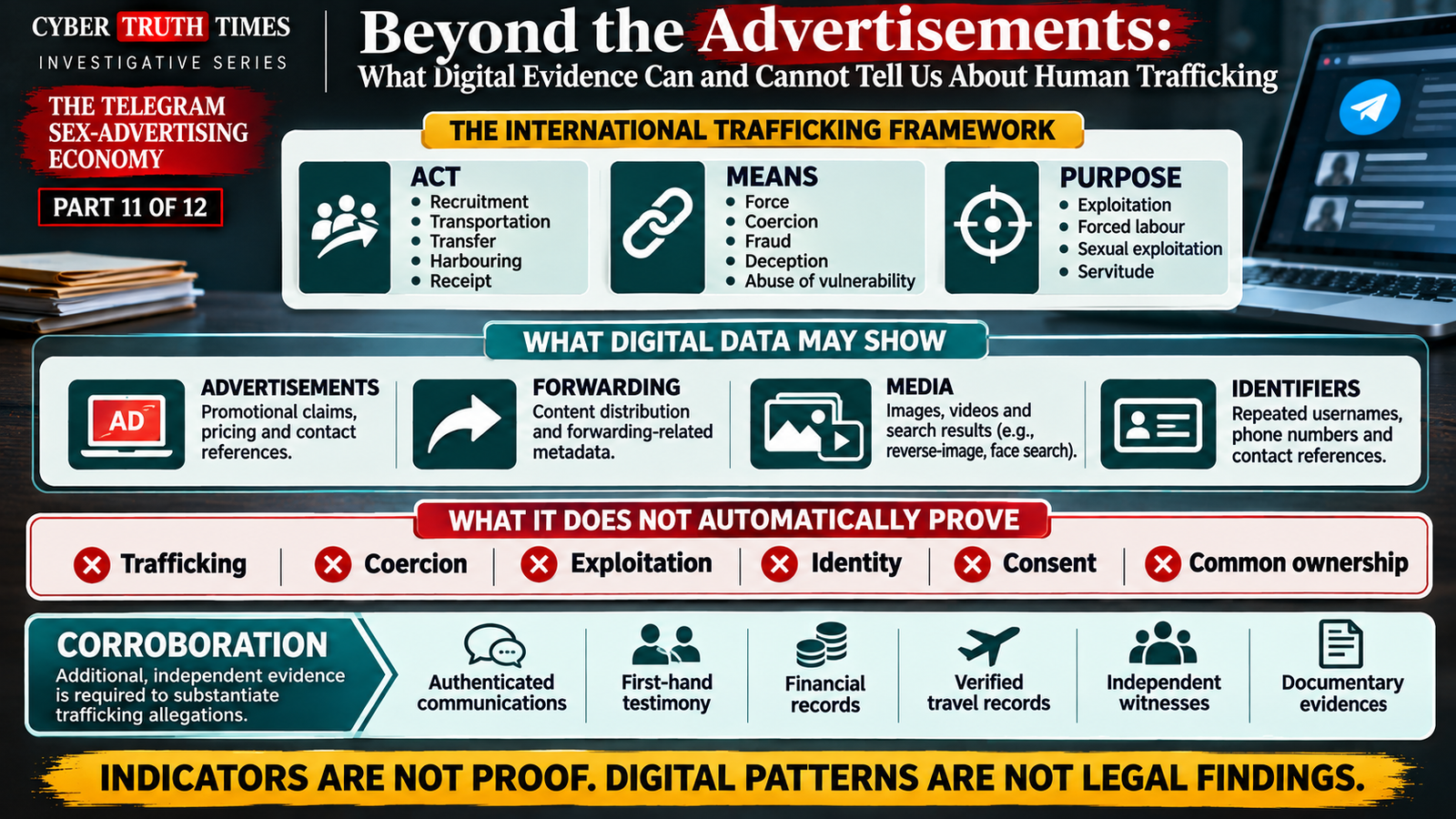
Amnesty said some recruits reported having passports or phones taken, being prevented from leaving facilities, receiving less money than promised or facing threats when they sought to leave. The organisation concluded that certain practices amounted to human trafficking under the definition in the UN Palermo Protocol.
That is a serious legal assessment, but it should not be applied indiscriminately to every foreign recruit. Human trafficking requires an examination of the specific acts, means and purpose involved. Deception, coercion and exploitation must be established in the circumstances of each case.
The human cost: casualties, missing people and uncertain outcomes
The consequences of recruitment extend beyond the battlefield.
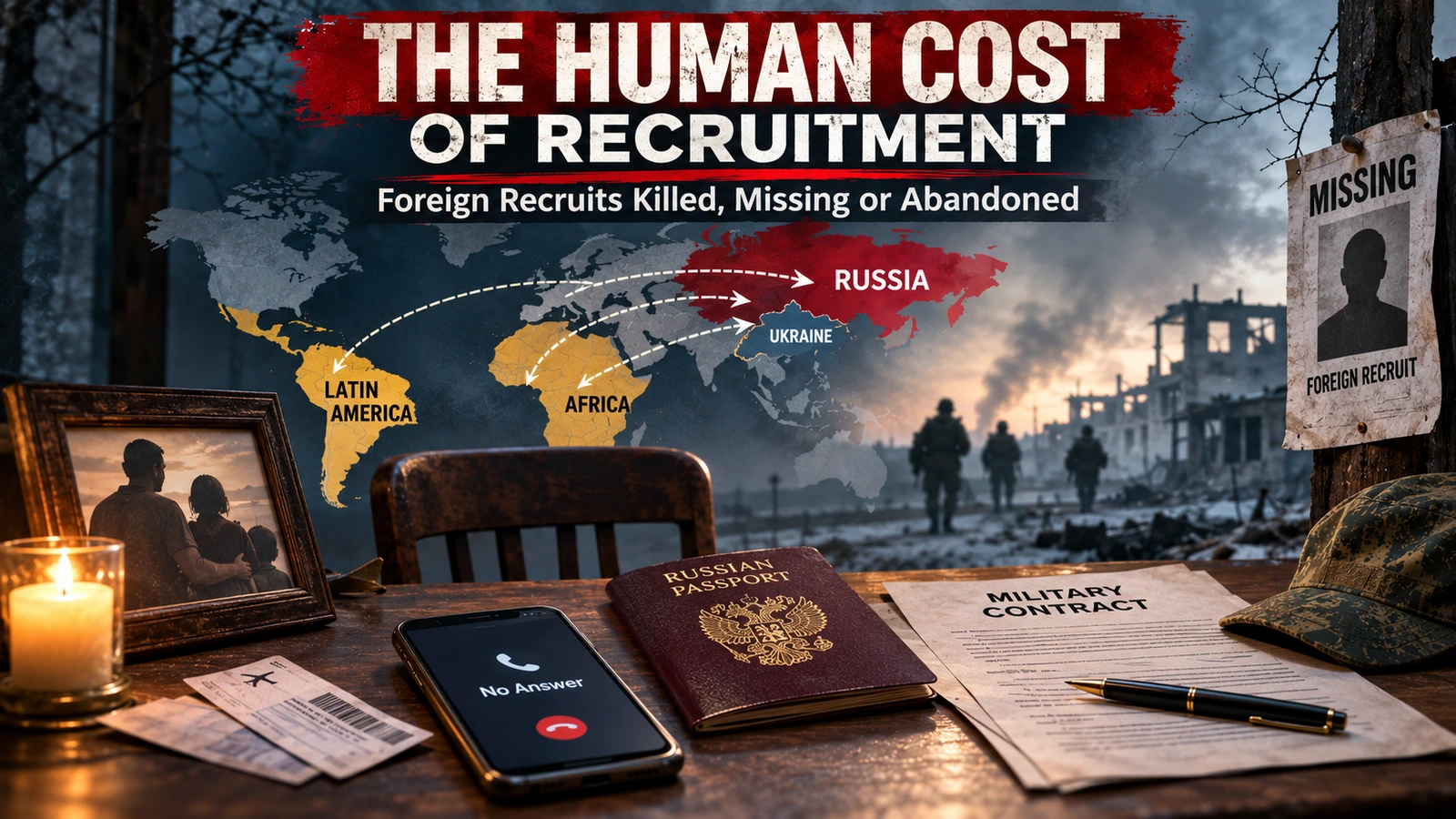
Families may be unable to establish whether a relative is alive, injured, detained, missing or dead. Language barriers and limited access to official records can make it difficult to identify the military unit, location or chain of command to which a recruit was assigned.
The October African dataset reported deaths among identified recruits from several countries, including Kenya, Egypt, Cameroon, Ghana and Nigeria. These numbers are not comprehensive. Some deaths may not yet have been identified, while other cases may remain unconfirmed.
The FIDH, Truth Hounds and KIBHR report warned that foreign recruits could be placed in highly dangerous frontline positions with limited preparation. It described cases in which individuals were promised civilian work but were later sent to combat roles.
Amnesty’s interviews similarly raised concerns about inadequate training, language barriers, restrictions on movement and the confiscation of personal documents.
These findings make it essential to distinguish between a person’s decision to enlist and the treatment they experience after recruitment. A person may voluntarily sign a military contract and still become a victim of fraud, abuse or unlawful coercion.
What the evidence establishes and what remains unknown
The evidence reviewed for this article supports several conclusions.
First, Russian military recruitment has expanded across Africa and Latin America. Ukrainian records cited in October 2026 identify substantial contract numbers from Colombia, Peru, Burundi and Zimbabwe, while separate reporting identifies thousands of African recruits from dozens of countries.
Second, the recruitment process is not limited to direct military advertising. Investigations have documented civilian job offers, local agents, social media accounts, messaging applications and travel arrangements as part of the recruitment pathway.
Third, the circumstances of enlistment vary. Some individuals knowingly joined; others report deception, coercion or exploitation. Neither position should be assumed without case-specific evidence.
Fourth, public figures remain incomplete and inconsistent. Intelligence estimates, official government figures, named lists and contract records measure different populations. They must be attributed and dated rather than combined into a misleading global total.
Important questions remain unanswered: Which intermediaries are responsible for specific recruitment cases? Who finances their operations? Which agencies arrange visas and travel? What happens to candidates’ passports and phones after arrival? How many recruits are still serving, and how many have been killed, captured or gone missing?
The next phase of the investigation
For governments across Africa and Latin America, the issue is no longer simply whether citizens are travelling to Russia. It is whether recruitment intermediaries are operating across borders, whether job advertisements accurately describe the work being offered, and whether citizens are being exposed to military obligations they did not knowingly accept.
For investigators, the task is to connect the evidence without overstating it: preserve advertisements and contact details, establish the identity of intermediaries, verify travel and contract records, document the candidate’s account, and seek responses from the relevant agencies and authorities.
This is the next stage of The Digital Recruitment Pipeline, Cyber Truth Times’ investigation into the websites, intermediaries and digital infrastructure involved in recruiting foreign nationals for Russian military service.
The numbers are significant. But behind each entry is a person whose circumstances must be established individually and a family that may still be waiting for answers.
Bibliography and sources
- Hromadske — From job offers to the front line: How Russia recruits foreigners to fight in Ukraine — 29 October 2026. Country-level contract figures for Colombia, Peru, Burundi and Zimbabwe, and an overview of recruitment practices.
- The Insider — Russia expands war recruitment in Africa, with enlistment in Burundi up 23-fold — 26 October 2026. African recruitment figures, Kenyan government response and Ukrainian intelligence data.
- EL PAÍS — Cuba and Colombia, the main recruitment hubs for the Russian army in Latin America — 29 April 2026. Cuban intelligence estimate, Colombian recruitment accounts and regional context.
- Amnesty International — Russia: Recruitment of foreign nationals to fight in Ukraine amounts to human trafficking — 10 September 2026. Interviews and findings concerning deceptive recruitment, coercion and exploitation.
- International Federation for Human Rights — Russia’s war against Ukraine: Thousands of foreign nationals recruited by Russia in violation of international law — 29 April 2026. Joint research by FIDH, Truth Hounds and KIBHR.
- EUvsDisinfo — From social media to the front line: Russia’s foreign recruitment pipeline. Regional recruitment context and references to African and Latin American recruitment.
- Ukrainian Coordination Headquarters for the Treatment of Prisoners of War. Primary institutional source cited in reporting for foreign contract figures. Consult the underlying release and date when reproducing totals.
- The United Nations — Protocol to Prevent, Suppress and Punish Trafficking in Persons, Especially Women and Children. Legal framework relevant to assessing alleged trafficking.
Editorial note: Country figures in this article come from different reporting dates and methodologies. Contract totals, intelligence estimates, identified records, government tracing figures and documented deaths are not interchangeable. The article does not treat all foreign recruits as trafficking victims or assume that every person knowingly accepted frontline combat.
For deeper investigations on such topics, see our Cybercrime Investigations & Exposes.