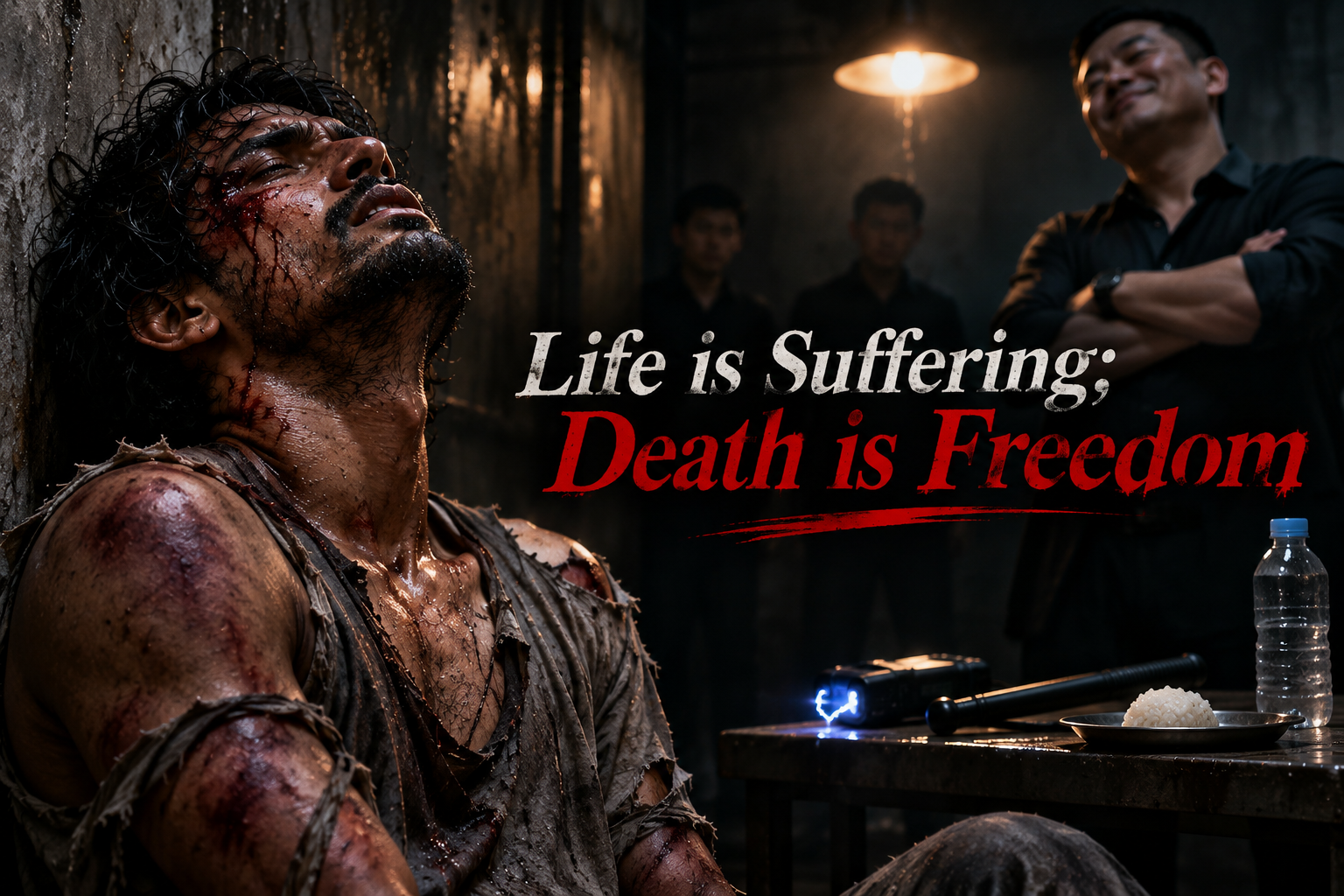
Perhaps the greatest tragedy of suffering is not the pain itself, but how quietly it changes the person who experiences it.
I have often wondered whether people truly understand suffering until life puts them in circumstances they never imagined they would encounter. It is relatively easy to discuss pain when it is an abstract concept, something we read about in books, observe in films, or sympathise with when someone else experiences it. But experiencing suffering is an entirely different education. It changes your relationship with yourself, with other people, with happiness, and sometimes with life itself.
I think I have received an education in suffering that I never asked for.
My understanding of pain has changed considerably over the years. I have experienced disappointments, isolation, fear, betrayal, and circumstances that have fundamentally altered the way I perceive the world. From the collapse of my childhood dream of living in Russia to the traumatic experiences I have described in Cambodia and Myanmar, my journey has been marked by situations in which survival sometimes seemed more important than anything else.
There is something profoundly disturbing about discovering how much a human being can endure.
Before experiencing such turmoil, I imagined happiness as something relatively straightforward. A successful career, financial independence, meaningful relationships, travelling across the world, and accomplishing personal ambitions seemed like reasonable ingredients for a fulfilling life.
I still believe those things matter.
But I no longer think happiness is as simple as achieving a collection of ambitions.
Suffering has taught me that happiness is not merely the presence of good things; sometimes, it is the absence of things that make life unbearable.
There was a time when I associated happiness with achievement. I wanted to accomplish things, explore the world, acquire knowledge, and become someone capable of doing something meaningful. Yet, after experiencing circumstances that disrupted almost every aspect of my life, I began understanding the importance of things I had previously taken for granted.
Peace. Security. Freedom. Trust. Sleep without fear. The ability to wake up without anticipating another disaster.
These are extraordinarily ordinary things, but their value becomes apparent when they are threatened.
I have also developed a different understanding of pain.
Pain is not always visible. Sometimes, it manifests itself through silence. Sometimes, it appears as anger, irritability, emotional detachment, or an inability to communicate what is happening inside your mind. There are moments when explaining your experiences feels more exhausting than simply remaining silent.
You can be surrounded by people and still feel profoundly isolated because nobody knows what is happening beneath the surface.
And perhaps one of the most difficult aspects of prolonged suffering is that it does not necessarily end when the circumstances change. You can leave a dangerous environment and still carry its psychological consequences. Your surroundings may become safer, but your mind might continue behaving as though danger is imminent.
I have found that the past can occupy an extraordinary amount of space in the present.
There are memories I would rather not revisit, questions I cannot answer, and moments that make me wonder how differently my life might have unfolded. Sometimes I think about the opportunities I lost while trying to survive situations that were never part of my original ambitions.
It is difficult not to feel resentment about that.
Watching other people progress through ordinary stages of life while you are attempting to reconstruct your own can be deeply frustrating. You begin comparing timelines, wondering what you could have achieved, and questioning whether you will ever recover the years that disappeared.
But time does not negotiate with regret.
Eventually, I began questioning another assumption I had held about suffering: that it necessarily makes people stronger.
I am not entirely convinced.
Suffering can make people more perceptive, but it can also make them distrustful. It can develop resilience, but it can also leave someone emotionally exhausted. It can teach compassion, but it can equally produce anger and bitterness.
Pain does not automatically improve a person. Sometimes, it simply hurts.
I think there is a tendency to romanticise suffering, particularly when discussing individuals who have survived extraordinary circumstances. We describe them as warriors, survivors, or people who emerged stronger than before.
But what about the exhaustion? What about the nights when someone cannot sleep? What about the moments when they wish they could experience an ordinary, uncomplicated existence?
Those experiences deserve acknowledgement, too.
I don’t want to pretend that everything happened for a reason or that every terrible experience contains some hidden blessing. I cannot honestly say that I am grateful for everything that happened to me.
Some experiences should never have happened.
However, I can decide what I do with the life that remains.
That distinction has become increasingly important to me.
Perhaps this is why building Cyber Truth Times means so much. It gives me an opportunity to direct my attention towards something constructive. Researching, investigating, writing, and documenting evidence provide a sense of purpose that I desperately want to preserve.
I want to build something meaningful, but I also want to learn how to live beyond the circumstances that brought me here.
I am beginning to understand that happiness cannot be postponed indefinitely until every ambition is fulfilled, every injustice addressed, or every financial difficulty resolved.
If I make happiness conditional upon achieving everything I want, I might spend my entire life waiting for it.
Perhaps happiness also exists in smaller experiences: reading a good book, discovering something intellectually fascinating, having an honest conversation, enjoying a quiet afternoon, or simply feeling safe enough to relax.
I am still learning to recognise those moments.
I don’t know whether suffering has made me wiser. I don’t know whether I have become stronger or simply more accustomed to enduring difficult circumstances. And I certainly don’t believe that surviving hardship makes anyone invincible.
What I do know is that my understanding of life has become considerably more complicated.
I no longer look at happiness as a permanent destination. I see it as something that requires attention, protection, and sometimes deliberate effort. I no longer consider vulnerability a weakness, although expressing it remains difficult for me.
And I am slowly learning that being at peace is not the same as surrendering.
Perhaps the greatest achievement would not be becoming wealthy, famous, powerful, or recognised for the things I accomplish. Perhaps it would be reaching a point where my past no longer dictates how I experience every present moment.
A point where I can remember without reliving, trust without constantly anticipating betrayal, and pursue my ambitions without allowing anger to become the foundation of my existence.
I have spent considerable portions of my life trying to survive pain. I would like to spend the remaining portions learning how to experience happiness.
Not extraordinary happiness. Not some cinematic transformation in which everything suddenly becomes perfect.
Just an ordinary, peaceful existence in which I can wake up, pursue my interests, build my work, enjoy my solitude, maintain meaningful relationships, and look towards tomorrow without fearing what it might bring.
After everything, perhaps that is the kind of happiness I understand best now.
And perhaps that is the kind of happiness I deserve to pursue.